Pismo clam growth synchrony
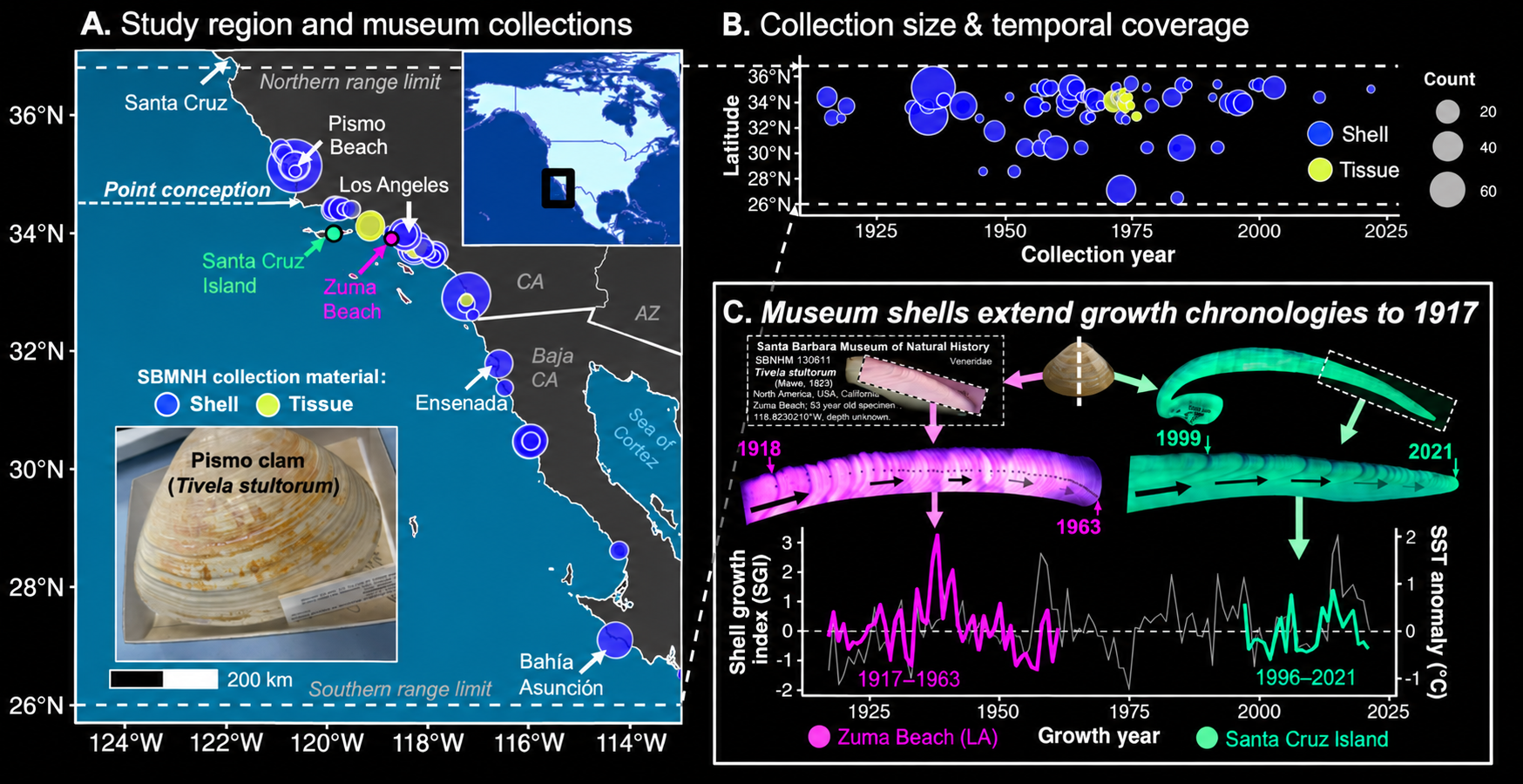
Do poor-growth years remain local or coincide across the species’ range? I’m building annual shell-growth records from museum specimens and new collections across California and Baja California to test when shared ocean conditions synchronize growth and when local habitat differences preserve asynchrony.
Why Pismo clams? · Collections · Methods · Growth and synchrony · Drivers
Why Pismo clams?
Pismo clams (Tivela stultorum) are filter feeders found in the sandy-beach surf zone with maximum lifespans exceeding 50 years.1 A longstanding diet staple and culturally significant resource for the Chumash,1,2 and a distinctive part of Baja California’s seafood traditions and culture.3 Heavy harvesting depleted populations in Southern and Central California, leading to the closure of the U.S. commercial fishery in 1947.1,4
Museum and contemporary collections
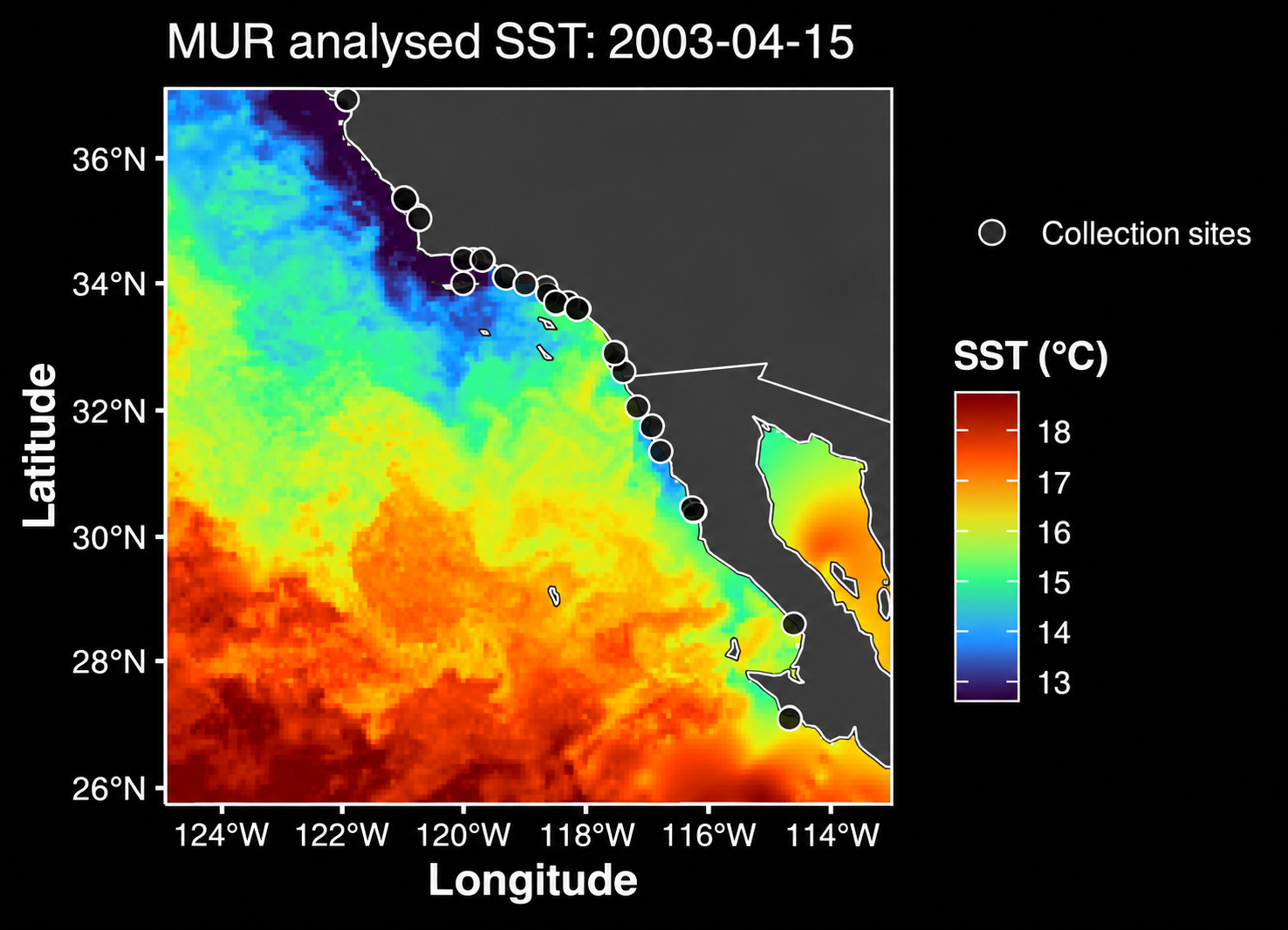
I’m combining historical shells from the Santa Barbara Museum of Natural History with contemporary collections across approximately 1,200 km of coastline to construct overlapping, crossdated shell records that will enable us to compare the same years among beaches and reveal the geography and timescales of shell-growth ~ environmental driver relationships.
Shell preparation and crossdating
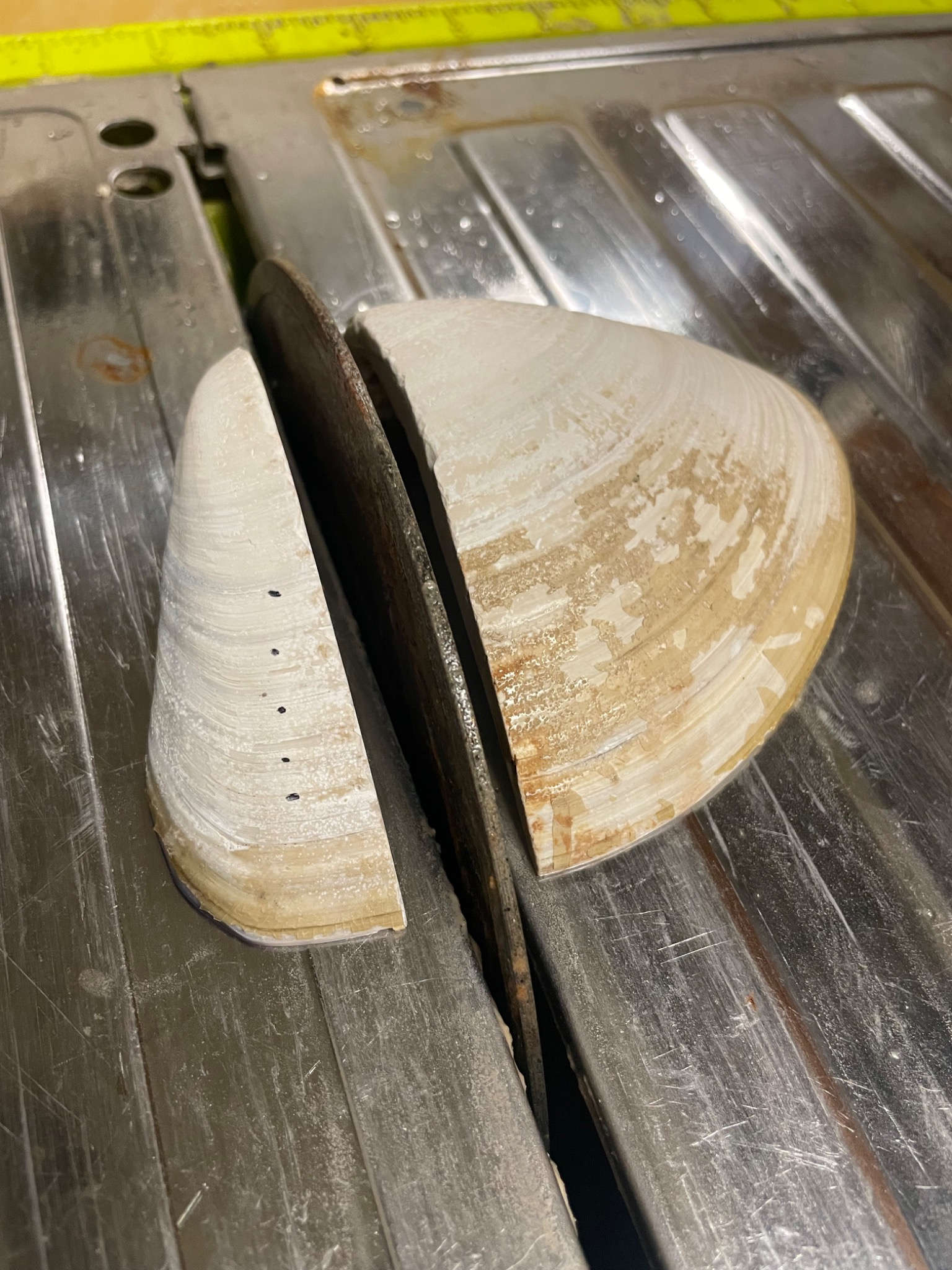
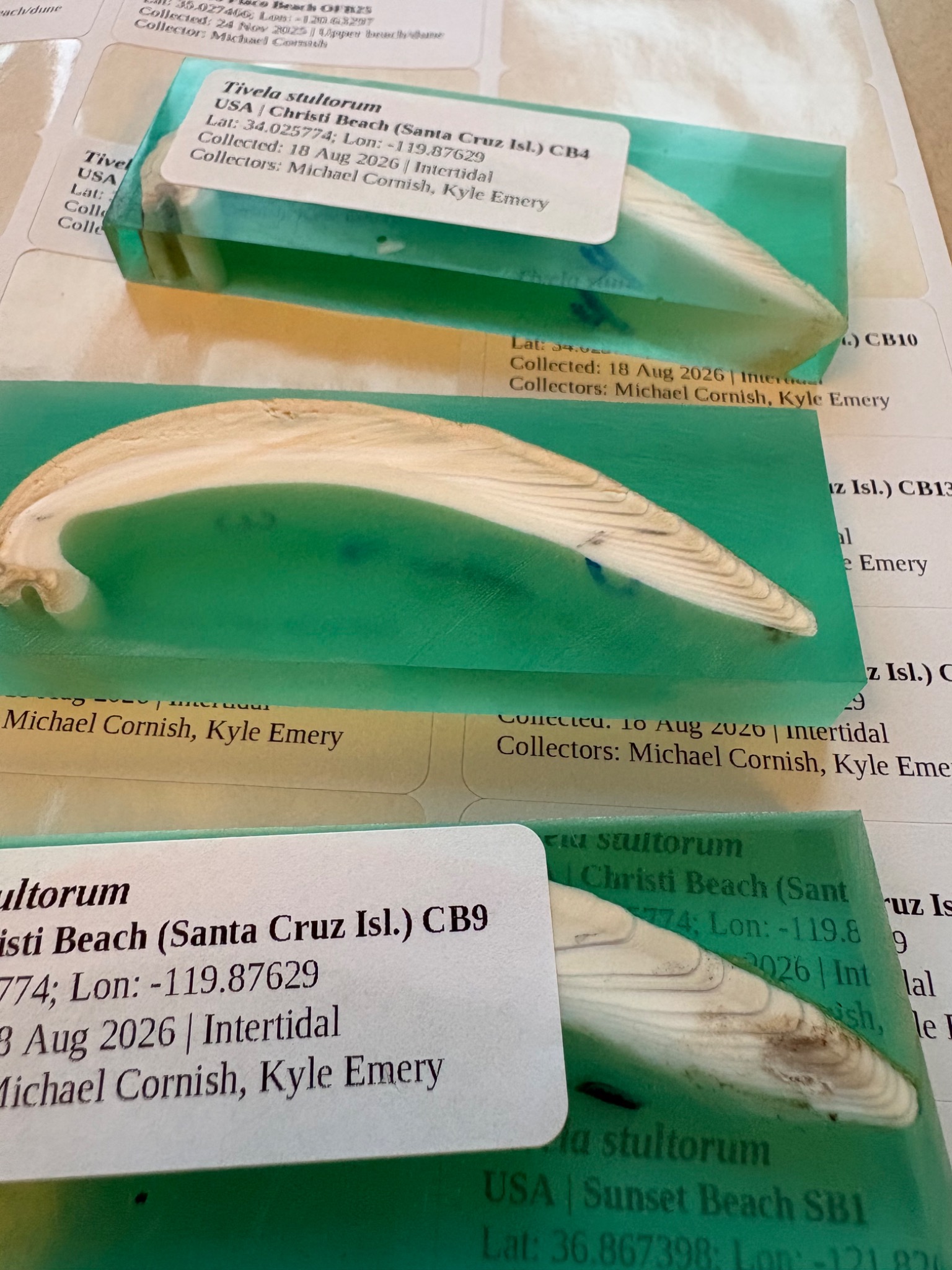
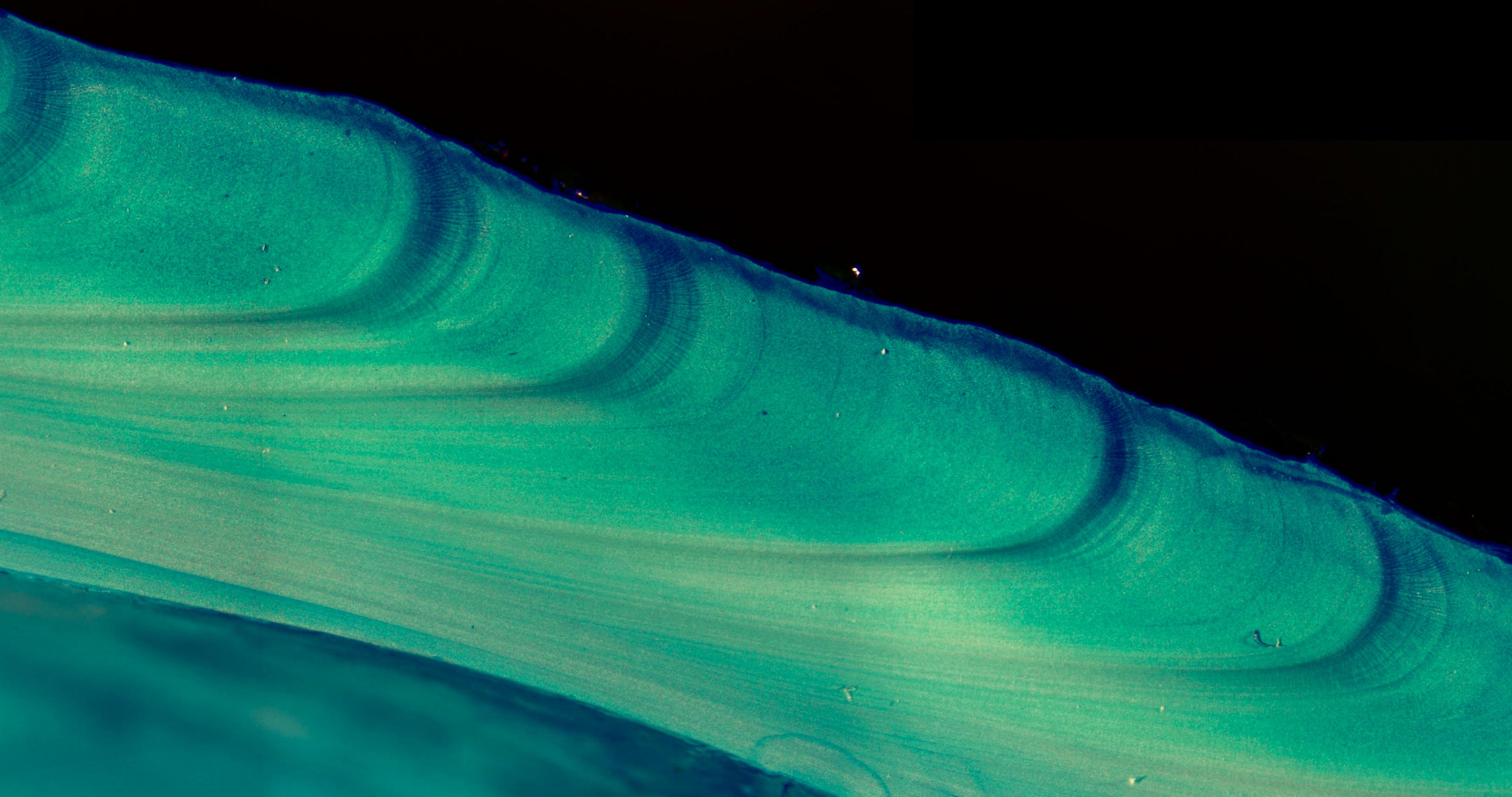
Shells are sectioned, polished, stained, and imaged. Crossdating compares growth patterns among individuals to check calendar-year assignments.
Growth record construction
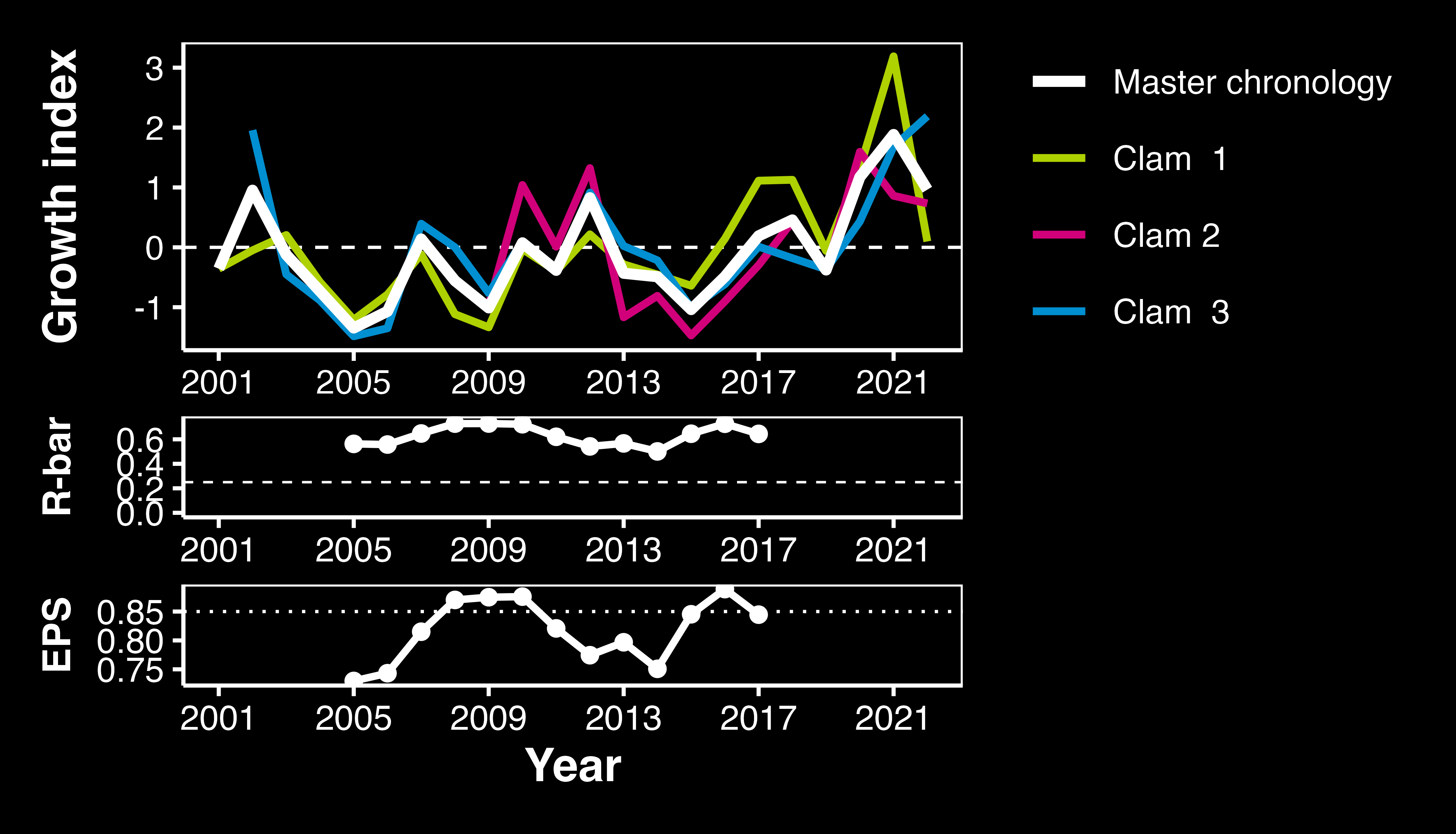
The Santa Cruz Island pilot shows a shared growth signal among shells from one site, supporting crossdating and chronology development. It establishes the feasibility of chronology development, but does not yet demonstrate synchrony across the species’ range.
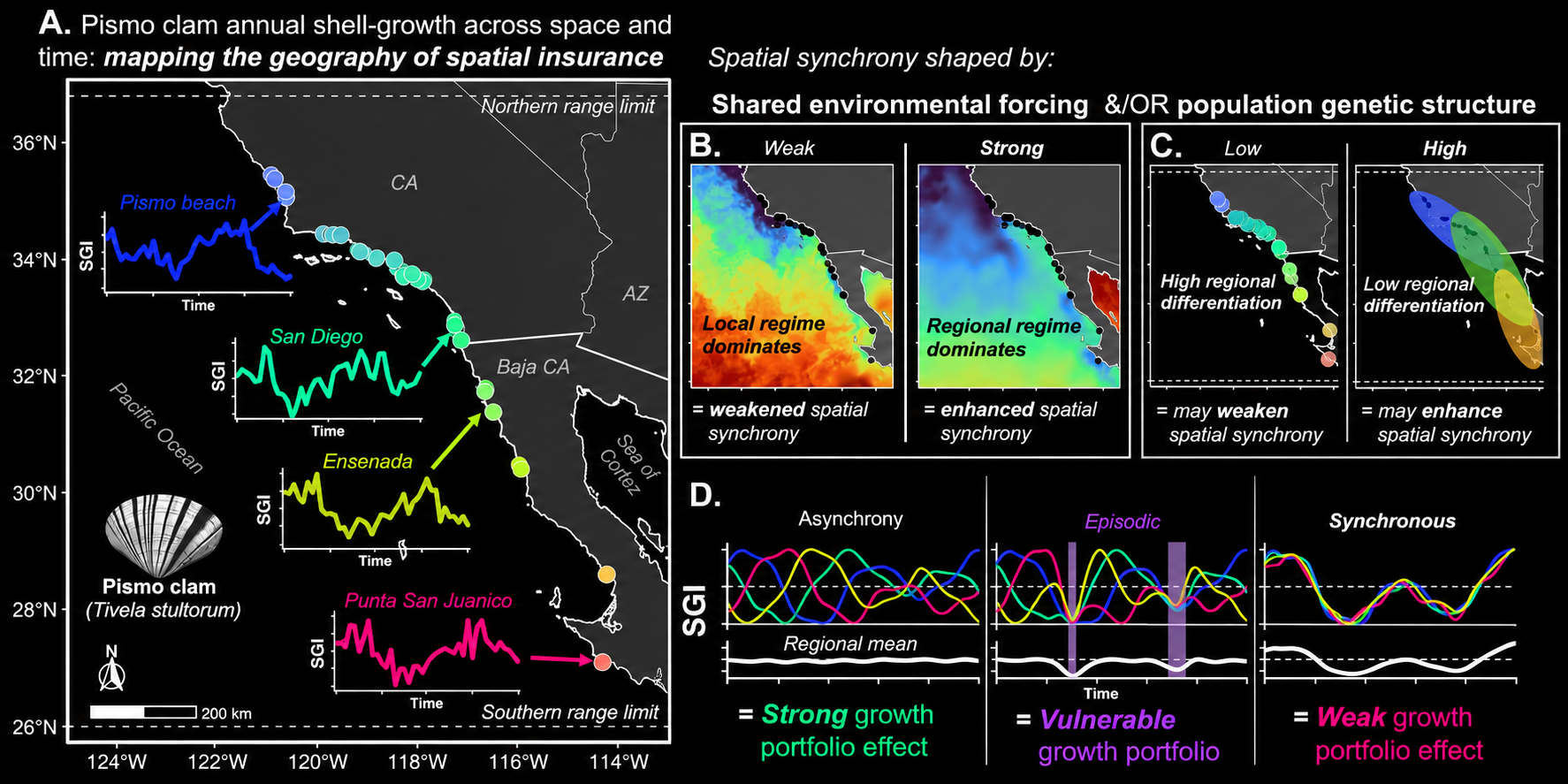
Geography, time, and extremes. A coast-wide growth chronology comparison across beach sites will test whether synchrony follows shared ocean conditions rather than distance alone, whether it is persistent or episodic, and whether year-to-year fluctuations and longer-term growth variation have different geographic patterns. I will also compare low- and high-growth years to test whether unusually poor growth is more widely synchronized.
Spatial insurance. I will quantify how covariance among site records changes the variability of their average growth. This growth portfolio represents the sampled sites; without historical abundance and size-structure records, it does not estimate total population production.
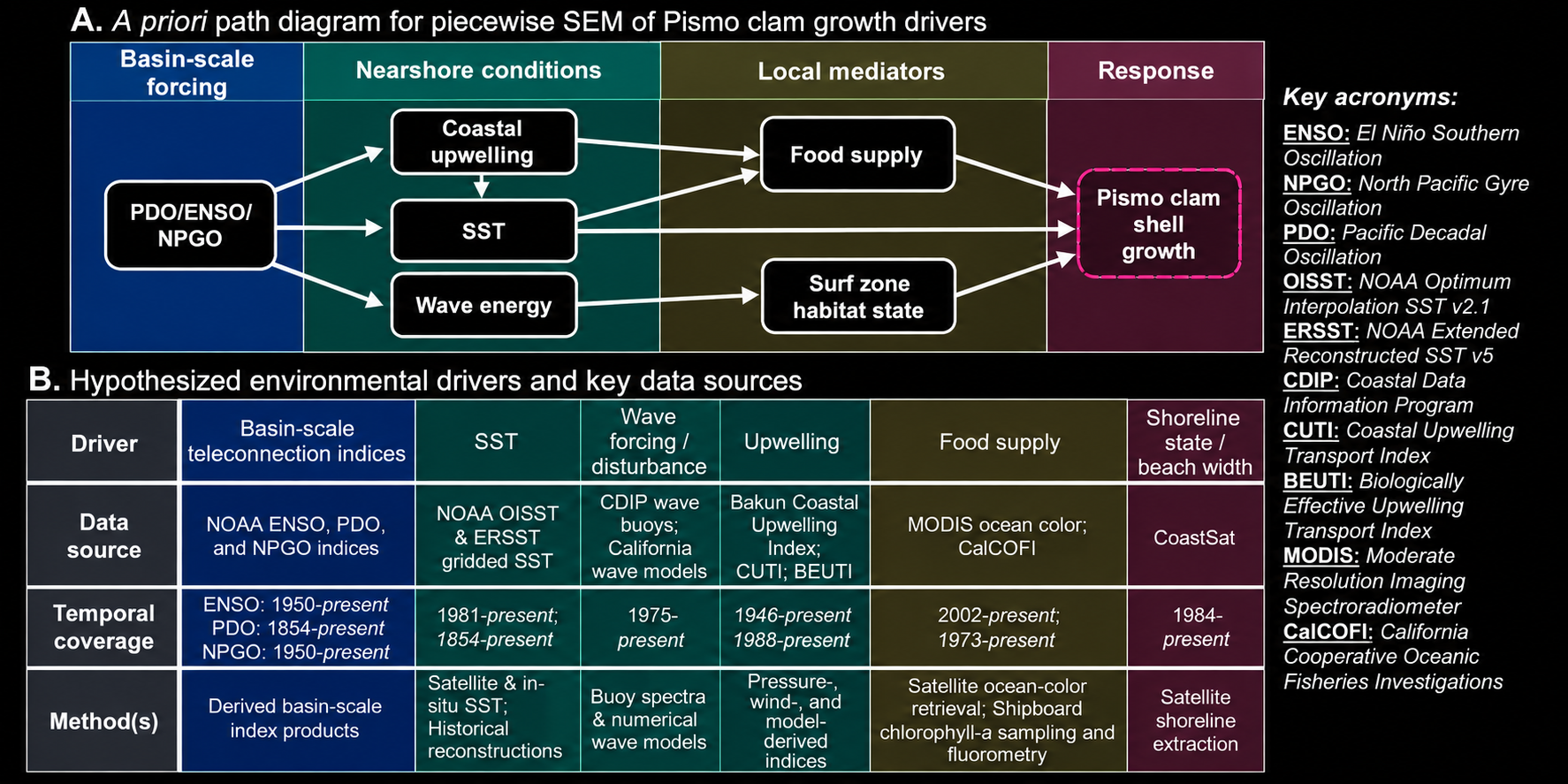
Hypothesized growth pathways and synchrony
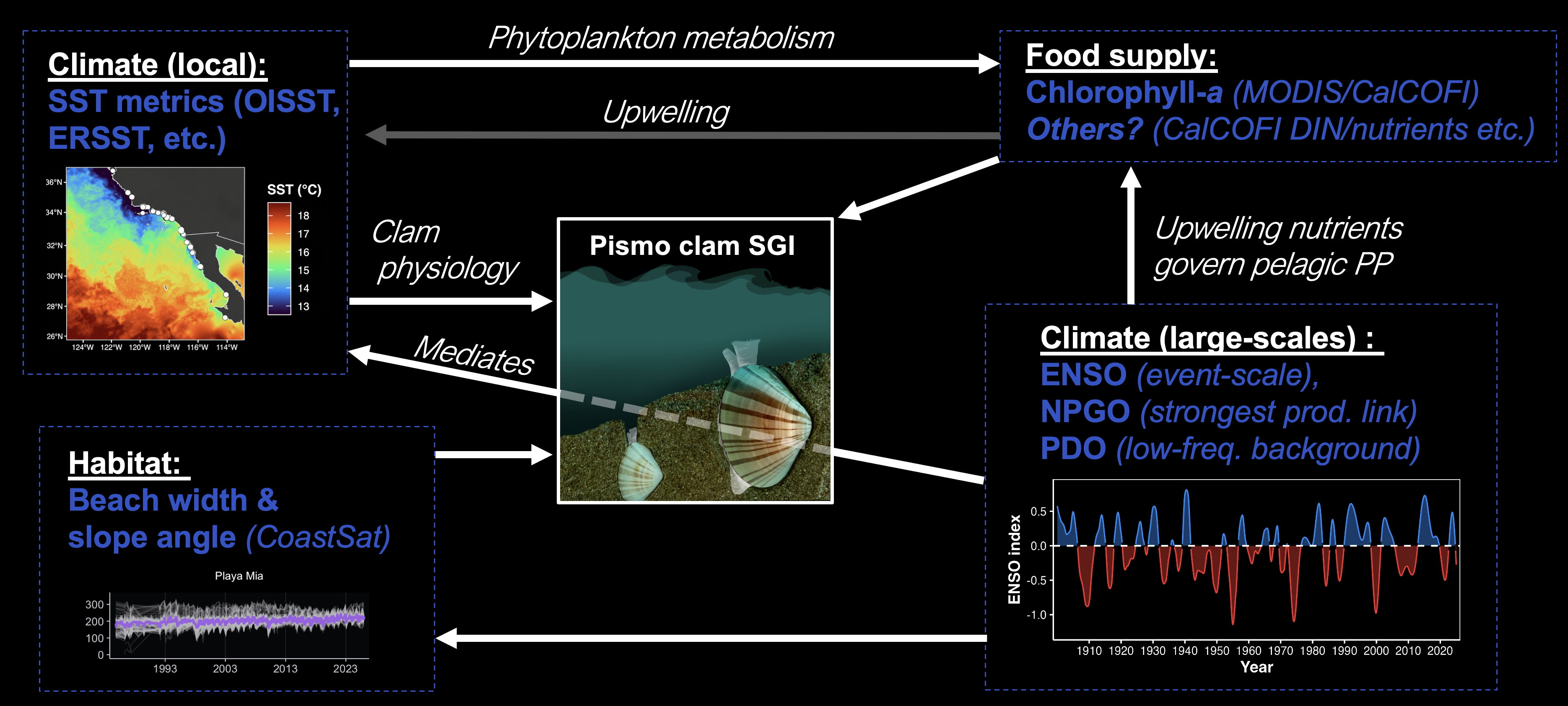
Conceptual expectations for the coastwide study, not completed range-wide results.
Environmental drivers of growth synchrony
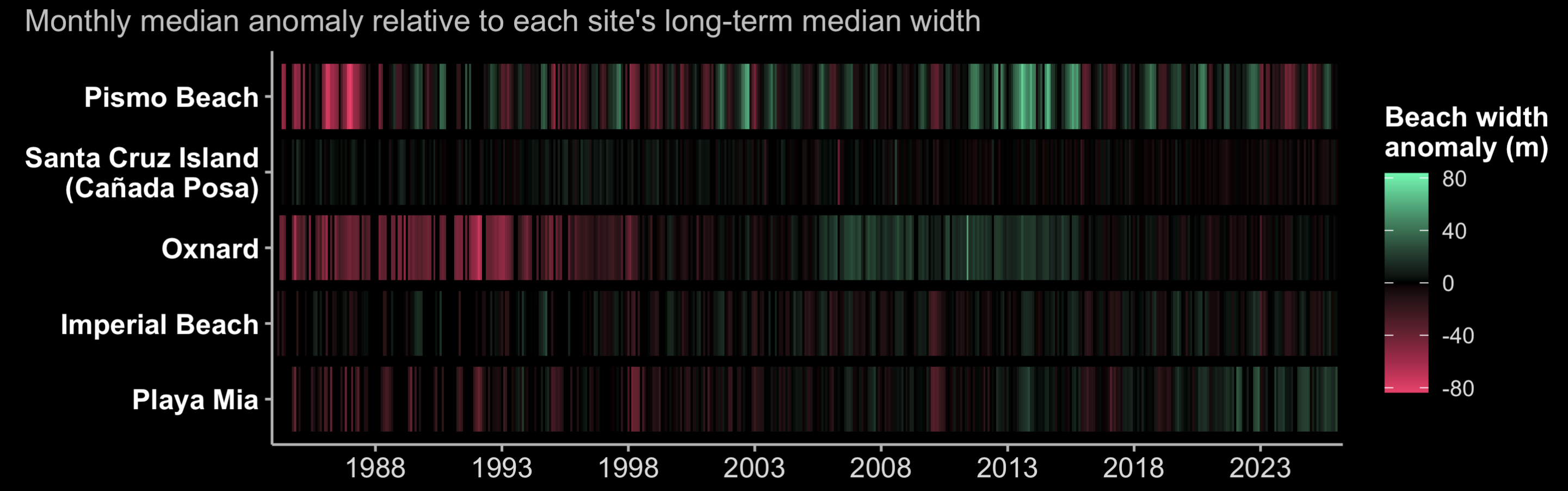
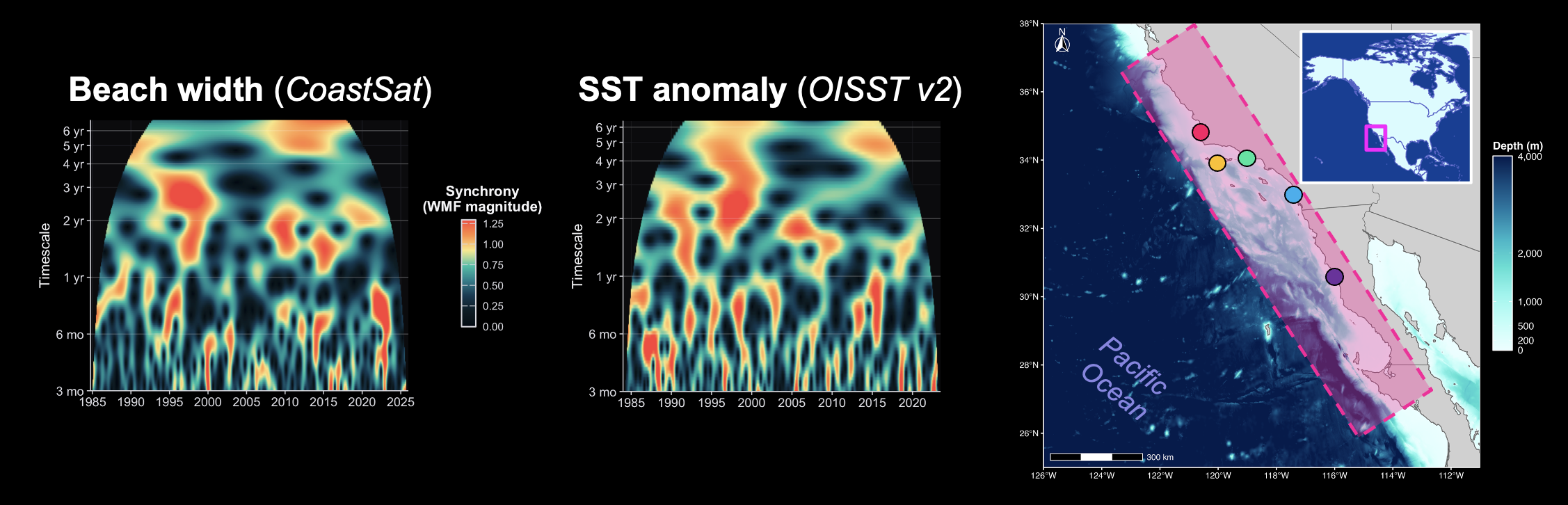
Planned analyses will pair growth records with temperature, upwelling, chlorophyll-a, wave forcing, and beach change. I will test whether sites experiencing similar environmental fluctuations also share growth fluctuations, and whether habitat differences modify that relationship after accounting for geographic distance.
Beach-width histories and environmental synchrony
Seagrass and long-term clam growth → · Shell records & ScleroLab →
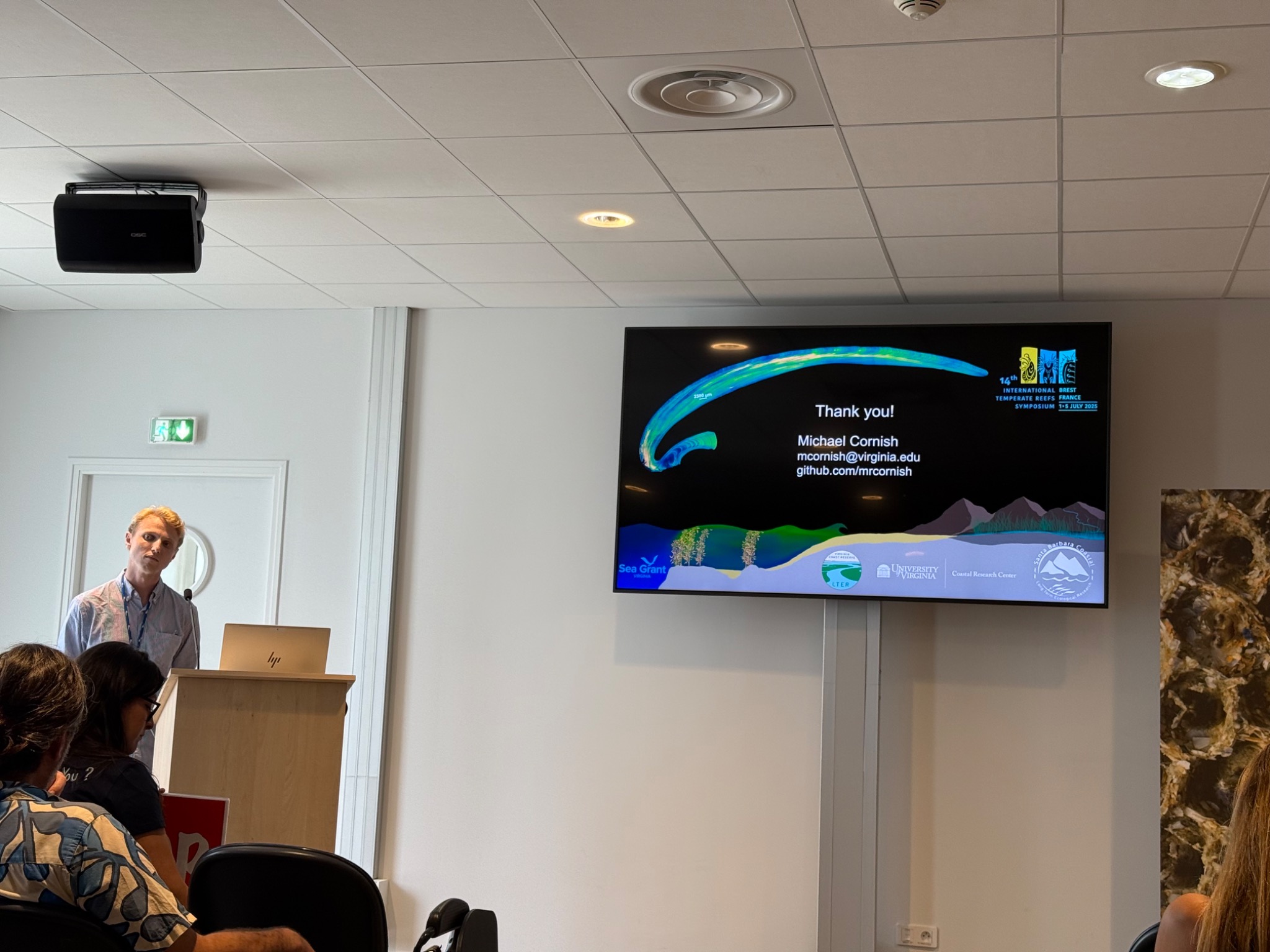
Presentations
Sources
1. Emery, K. A., et al. (2025). A chromosome-length genome assembly for the Pismo clam, Tivela stultorum, a long-lived bivalve species severely impacted by overfishing. Journal of Heredity 116: 680–690.
2. Arnold, J. E., & Rachal, D. (2002). The value of Pismo clam tube beads in California: experiments in drilling. North American Archaeologist 23: 187–207.
3. Baja California Travel (2025). Ensenada, la gastronomía más creativa. Regional food traditions and Pismo clams.
4. California Department of Fish and Wildlife (2022). Pismo Clam Enhanced Status Report: The Fishery. Historical harvest and the 1947 commercial-fishery closure.

