Teaching & mentoring
As an instructor and mentor, I emphasize careful observation, practical experience, and working collaboratively through ecological questions.
Mentored undergraduate research
Katharine C. Schlachter
REU 2021 · Distinguished Majors 2021–2022 · Wallace-Poole Prize, 2022
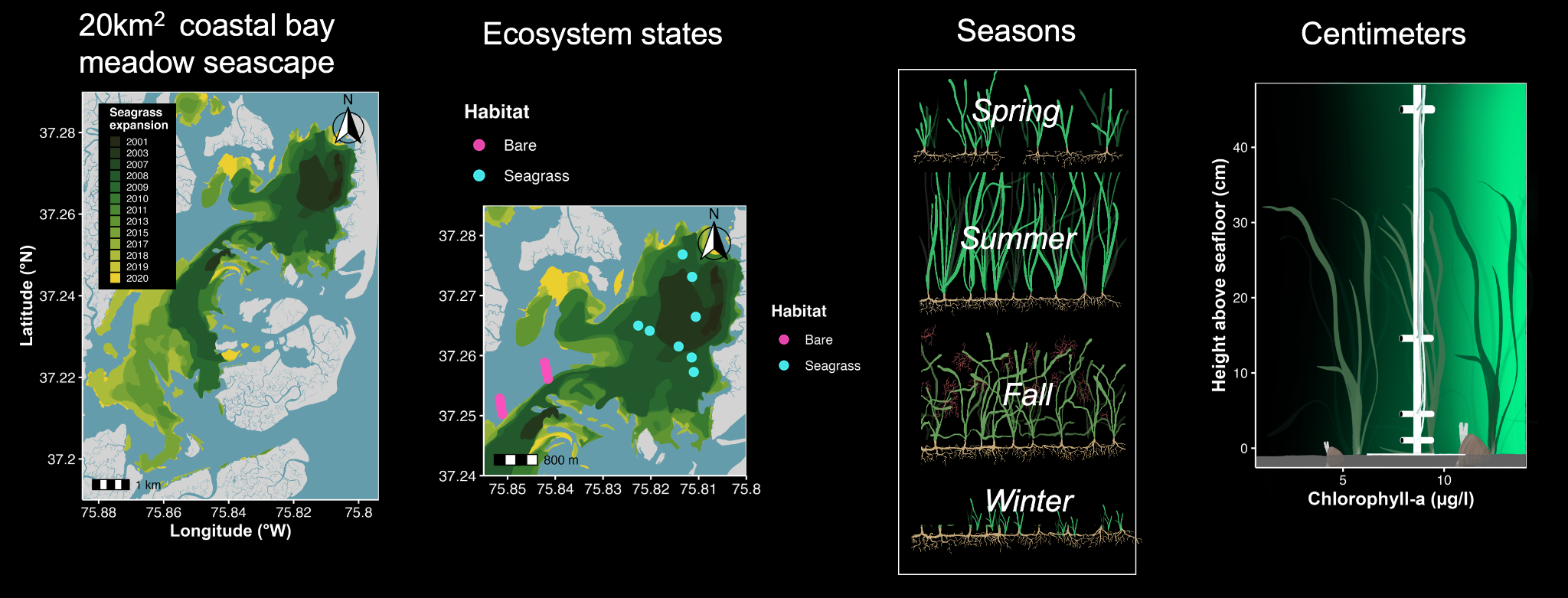
Distinguished Majors project: Suspended algal dynamics across a seagrass landscape.
I advised Katharine throughout the project, including study design, seasonal field sampling, laboratory pigment analysis, statistics, interpretation, and thesis writing.
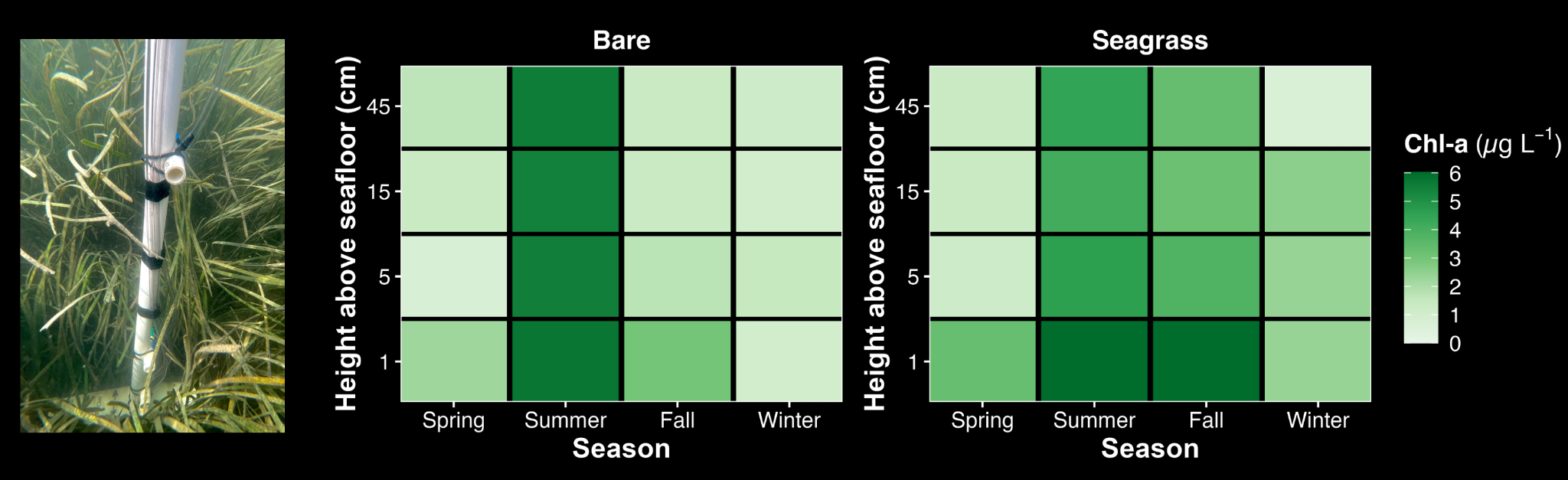
She collected water at 1, 5, 15, and 45 cm above the seafloor in eelgrass and bare habitats, then measured chlorophyll-a as an indicator of suspended algal biomass.
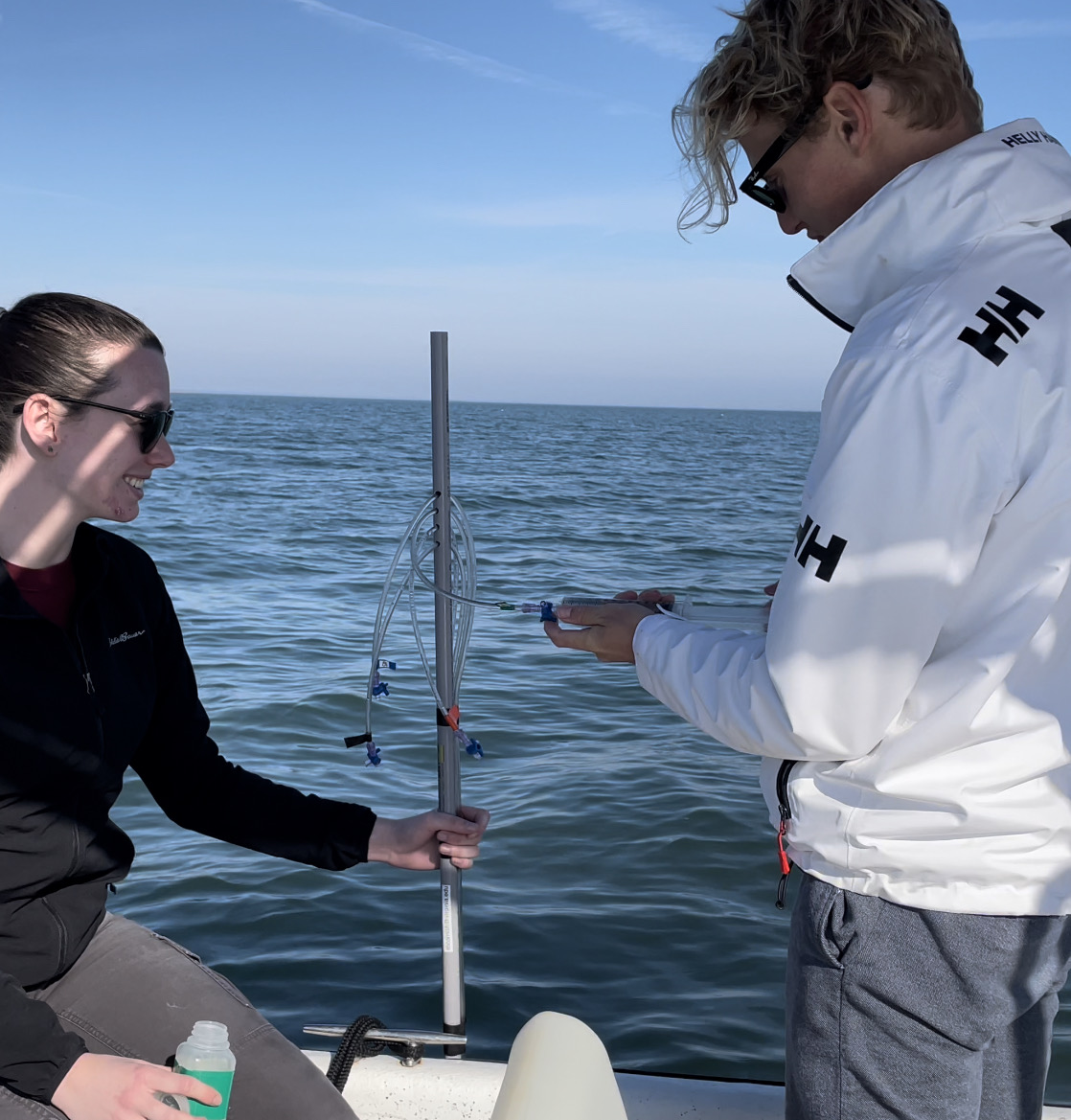
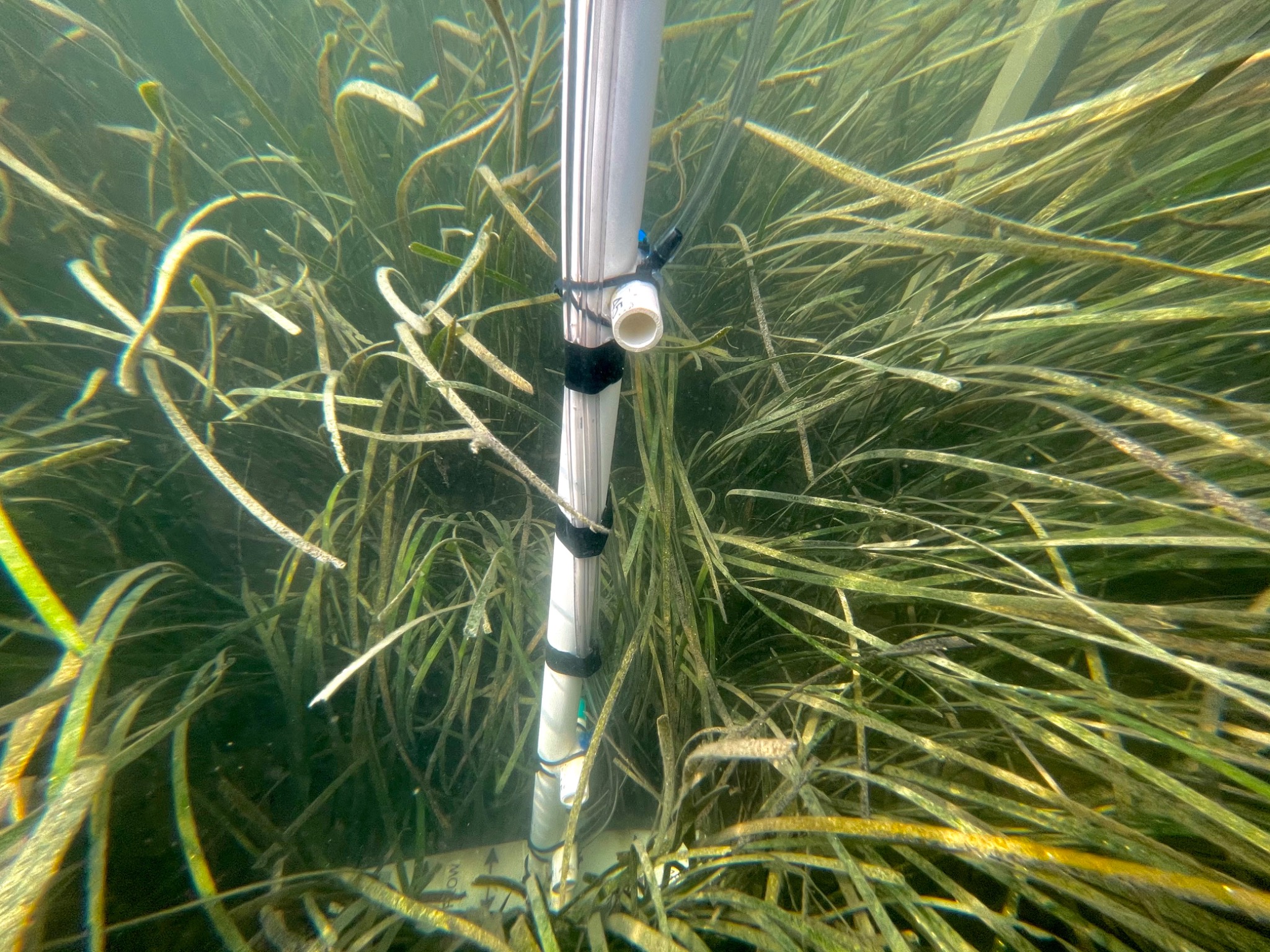
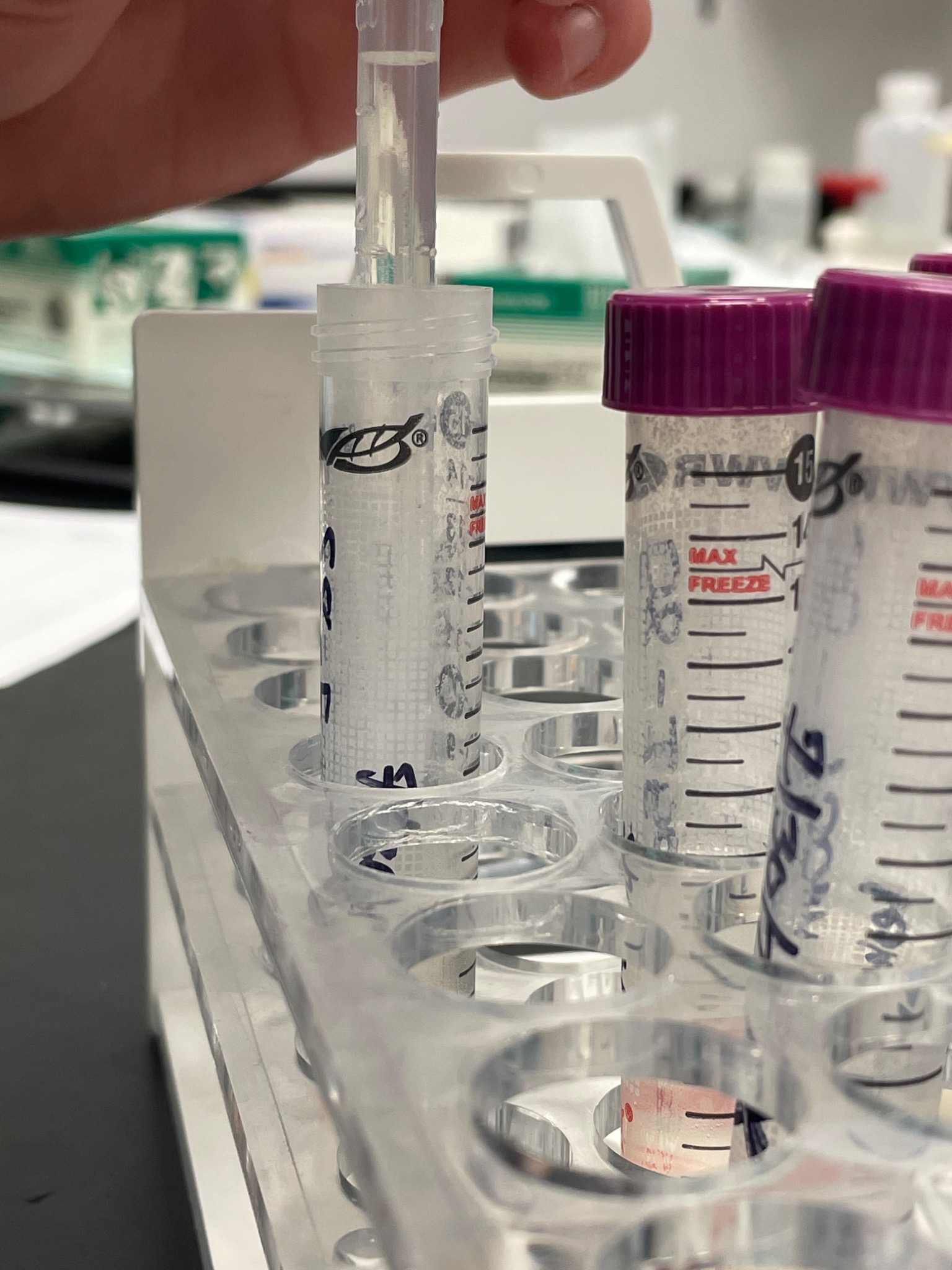
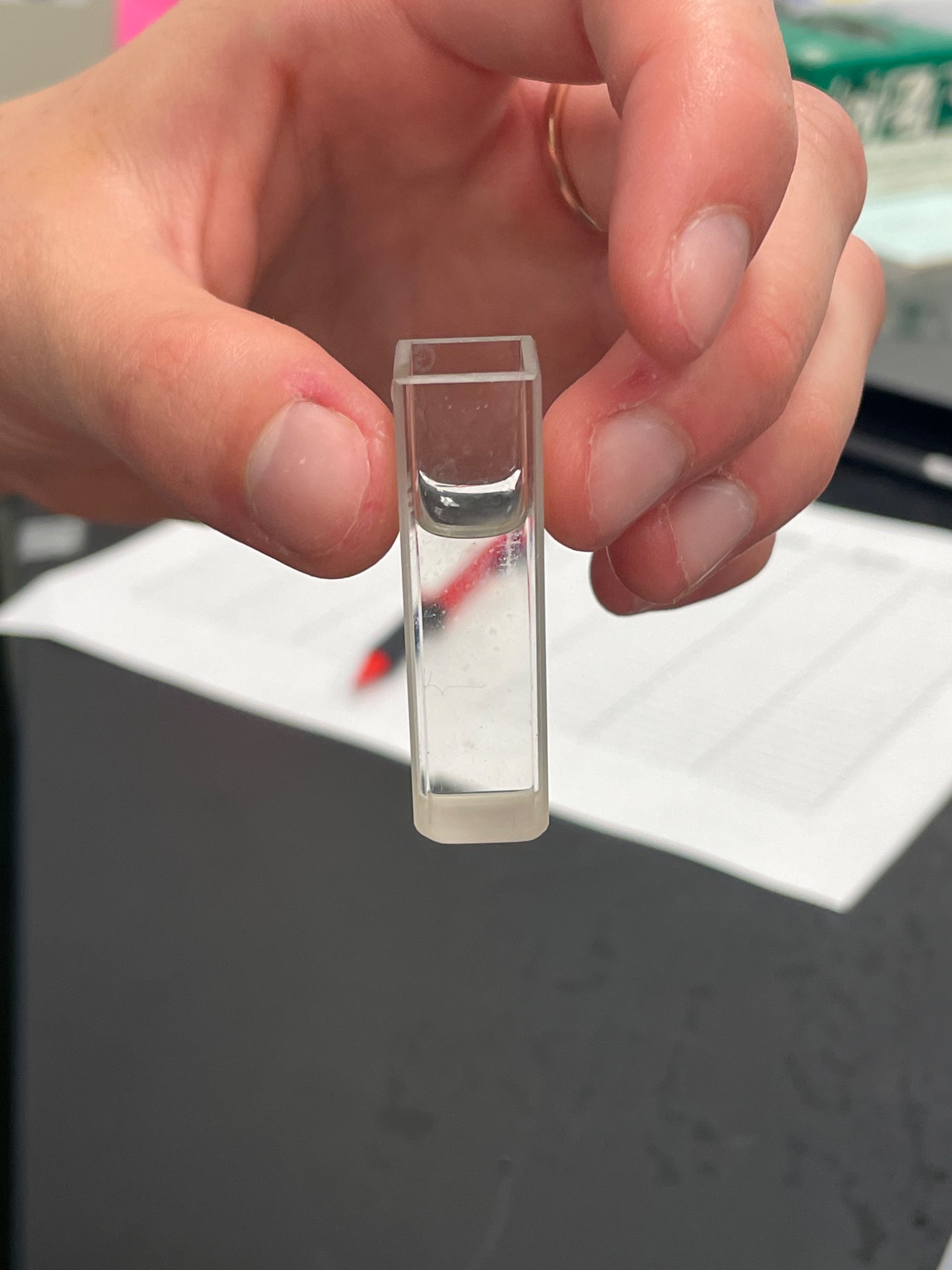
Water-column results. In the dissertation dataset, chlorophyll-a peaked in summer in both habitats and was generally concentrated near the seabed. Habitat differences varied with season: in autumn 2022, concentrations at 1 cm were about twice as high in seagrass as at bare sites (6.7 versus 3.2 µg L−1).
Selina L. Cheng
REU 2019 · Distinguished Majors 2020–2021 · Wallace-Poole Prize, 2021
I co-mentored Selina’s undergraduate research in the Castorani Lab, which developed into a first-author publication on blue crab habitat associations.
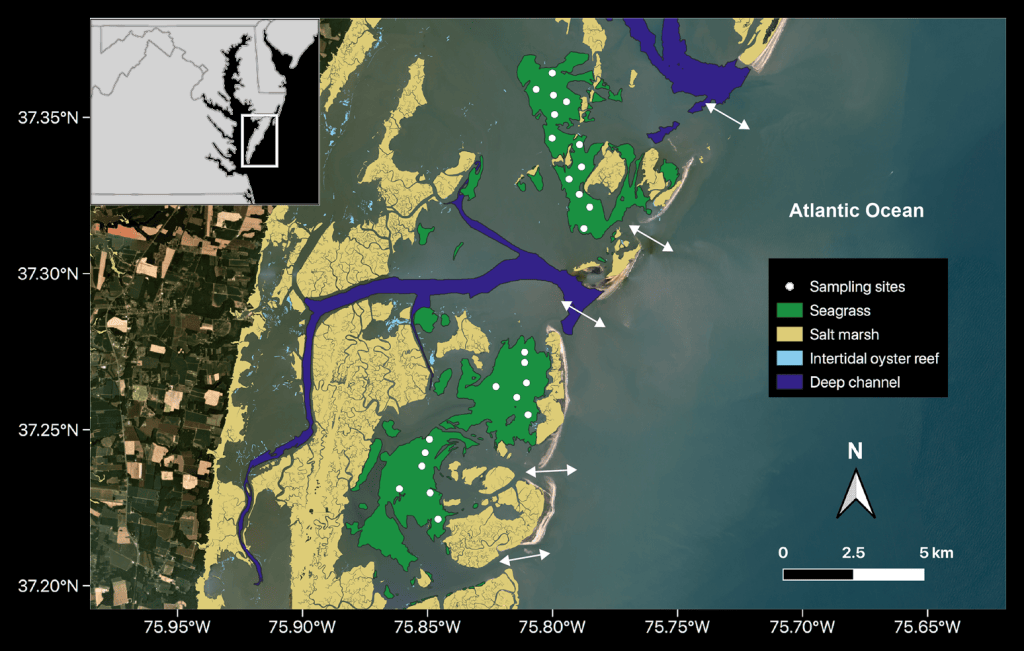
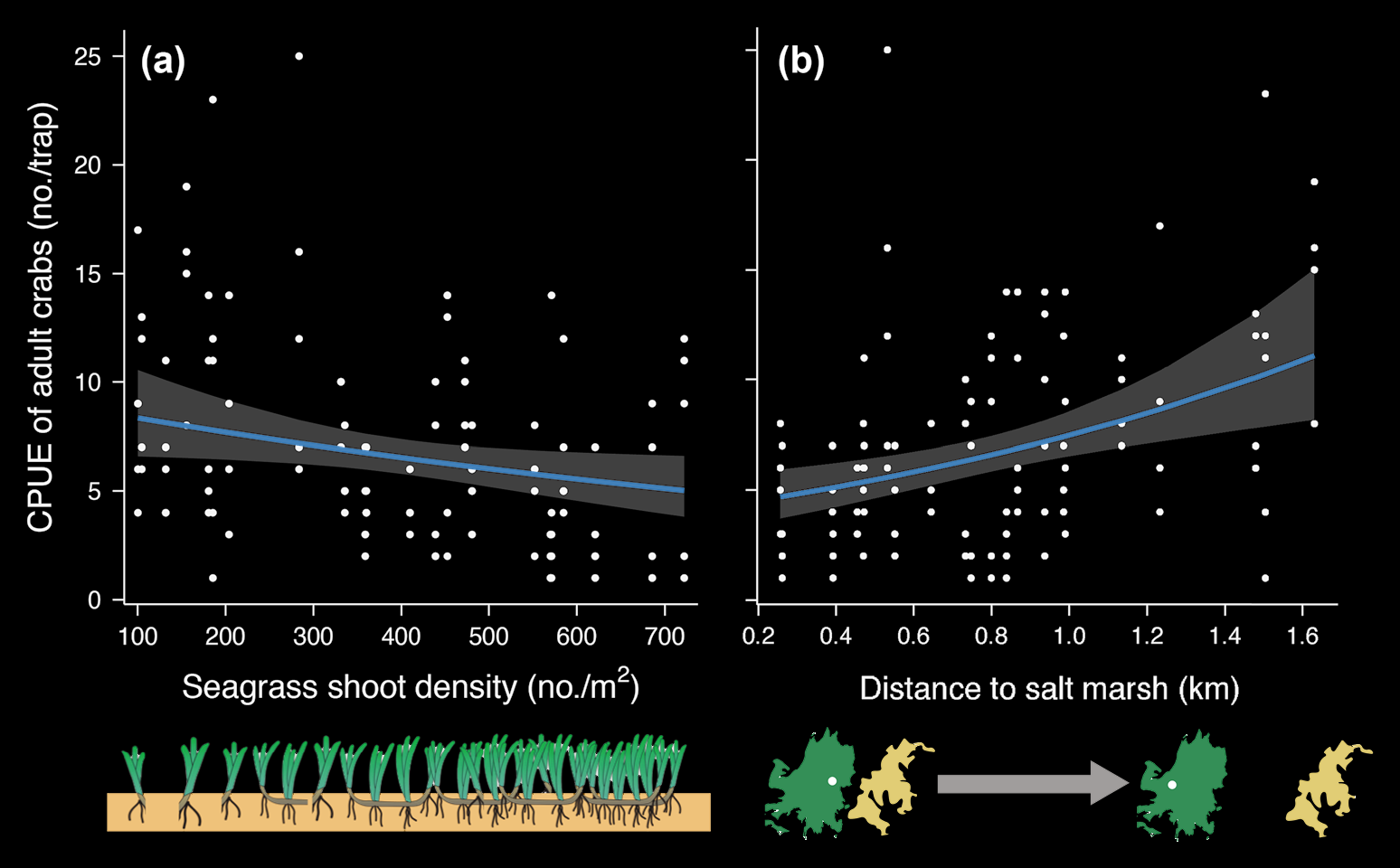
Combining crab surveys and habitat mapping at 24 sites across more than 33 km², her study found higher adult blue crab catch rates in sparse seagrass and farther from salt marshes. Habitat associations also differed with crab sex and reproductive stage.
Cheng et al. (2022). Coastal vegetation and bathymetry influence blue crab abundance across spatial scales. Estuaries and Coasts 45: 1701–1715.
Research skills
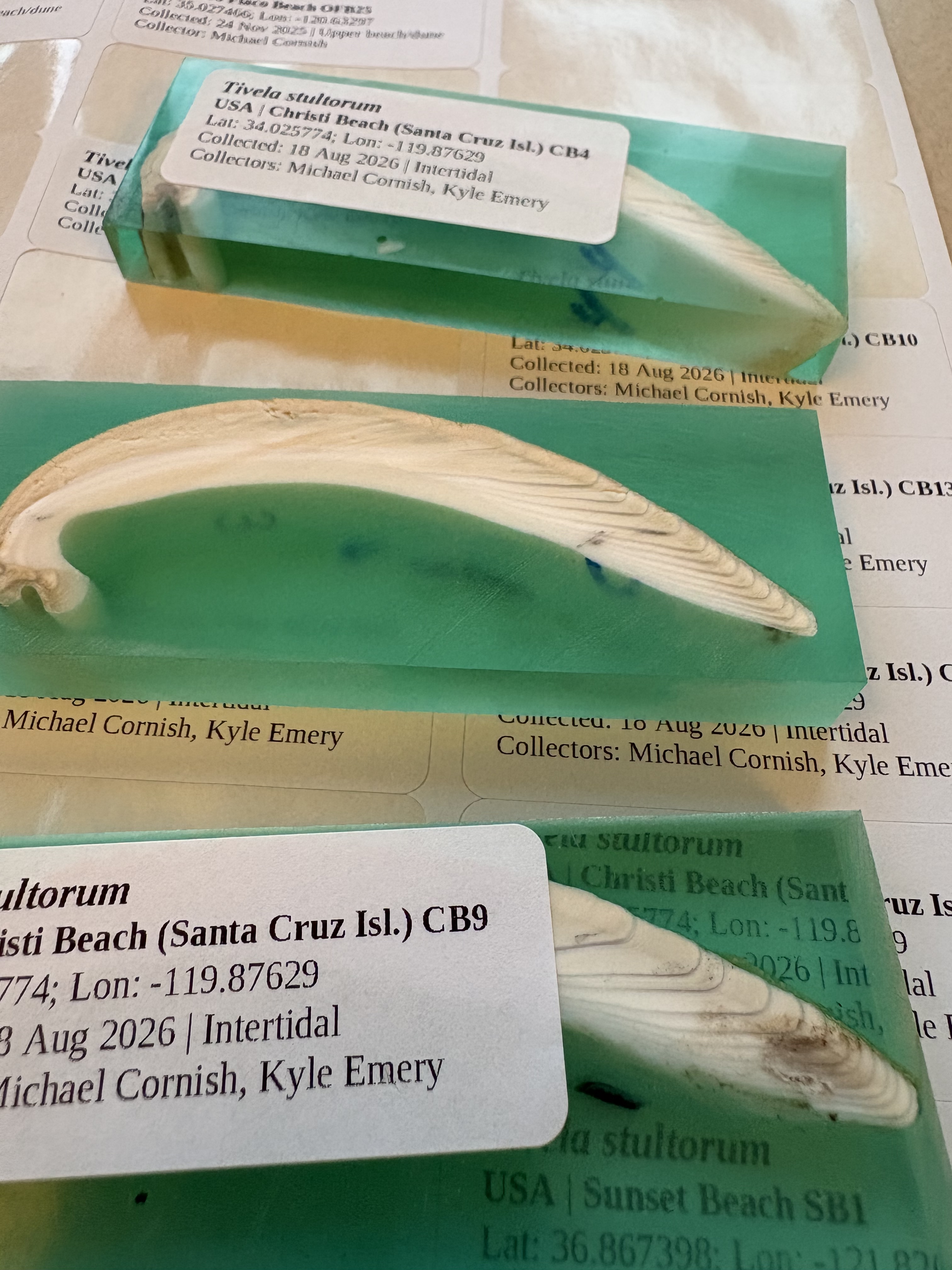
Specimen preparation
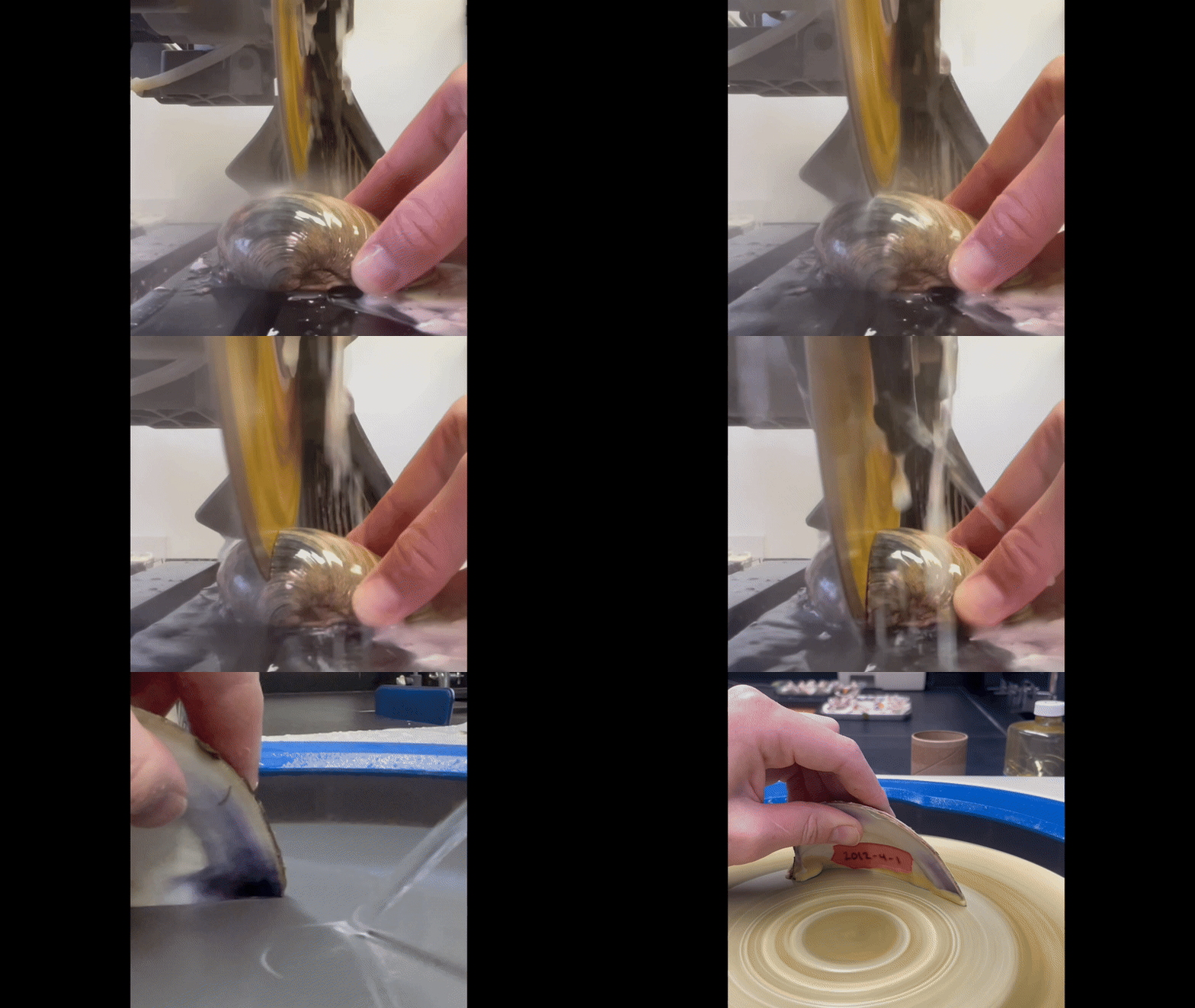
Field notes, species identification, and collection records; cutting, embedding in epoxy, mounting, and polishing shells.
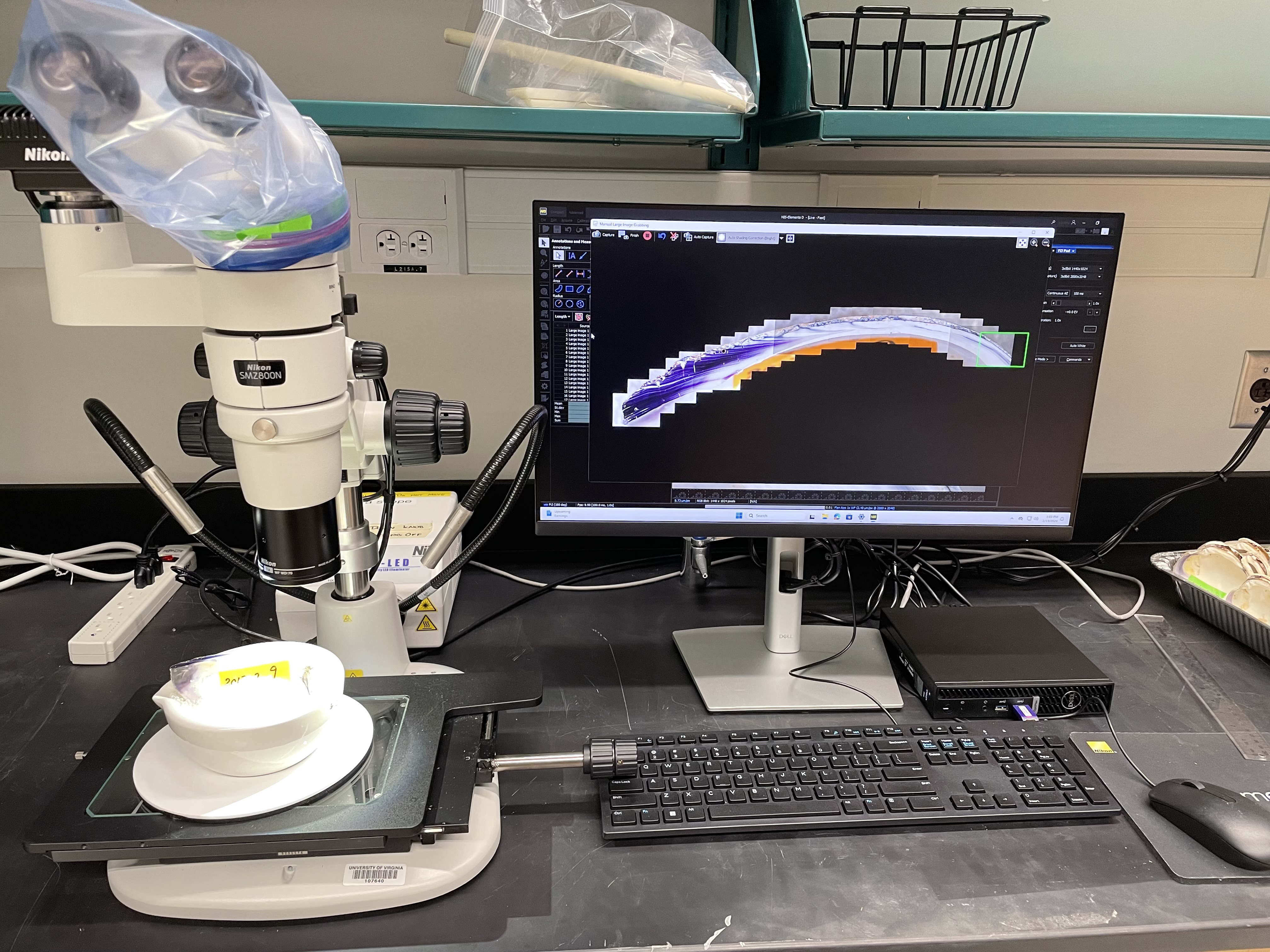
Imaging and measurement
Microscopy, annotated drawings, image analysis, and measurement comparisons to identify and resolve uncertainty.
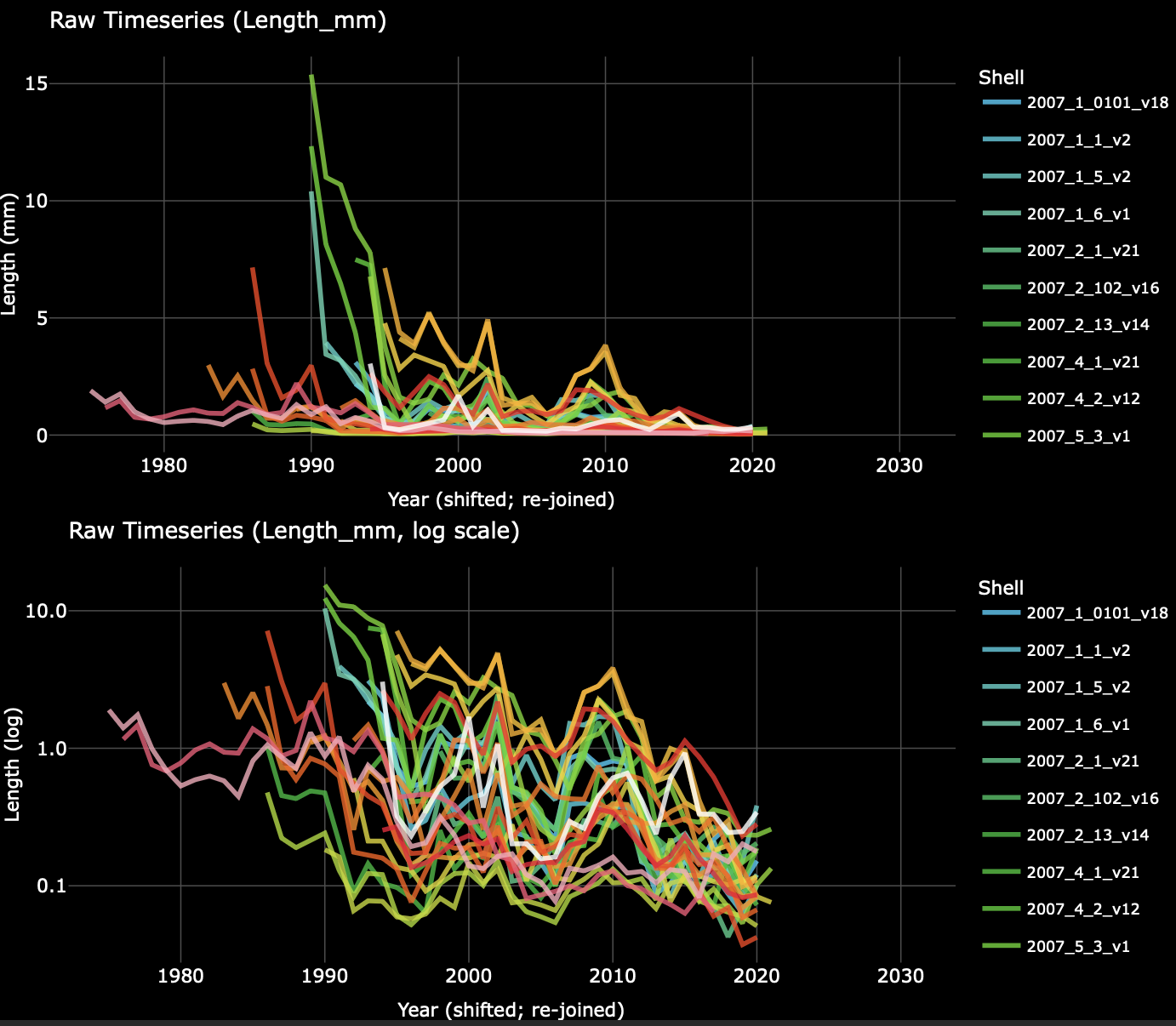
Data analyses in R
Exploring growth data in ScleroLab and R, testing predictions, and preparing figures and manuscripts.
Mentorship style
I aim to help students develop a manageable question, learn the methods they need, and take responsibility for their results. Regular discussion, feedback on analysis and writing, and clear expectations about contributions are important parts of that process.
Field, laboratory, and data-based projects offer different ways to participate. Diving and prior coding experience are not necessary for every project.
Teaching experience
Courses and teaching roles
University of Virginia: Introduction to Ecology Laboratory instructor (2019–2020); Spatial Ecology teaching assistant (2024).
College of the Atlantic: teaching assistant for Intro to Ecology (2019), Winter Ecology (2018), and Natural History of the Gulf of Maine (2016).
Scientific illustration and specimen displays
I use drawings, maps, and specimen-based artwork as physical teaching tools to explain the organisms, methods, and habitats in my research.