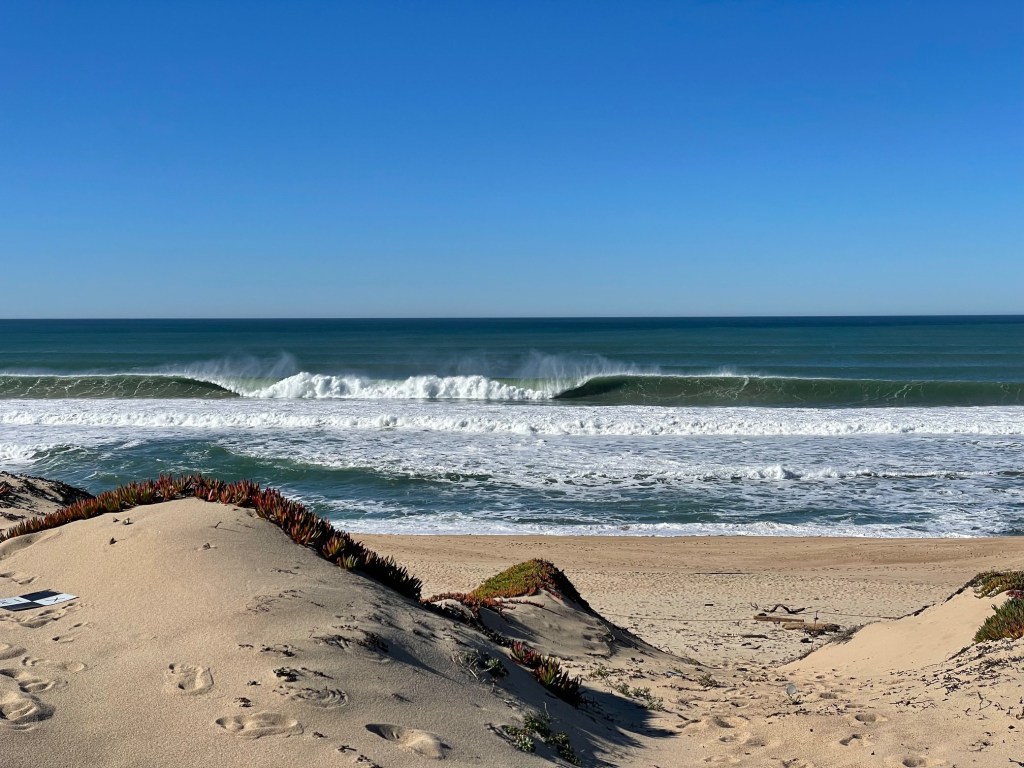
Clam shell records & ScleroLab
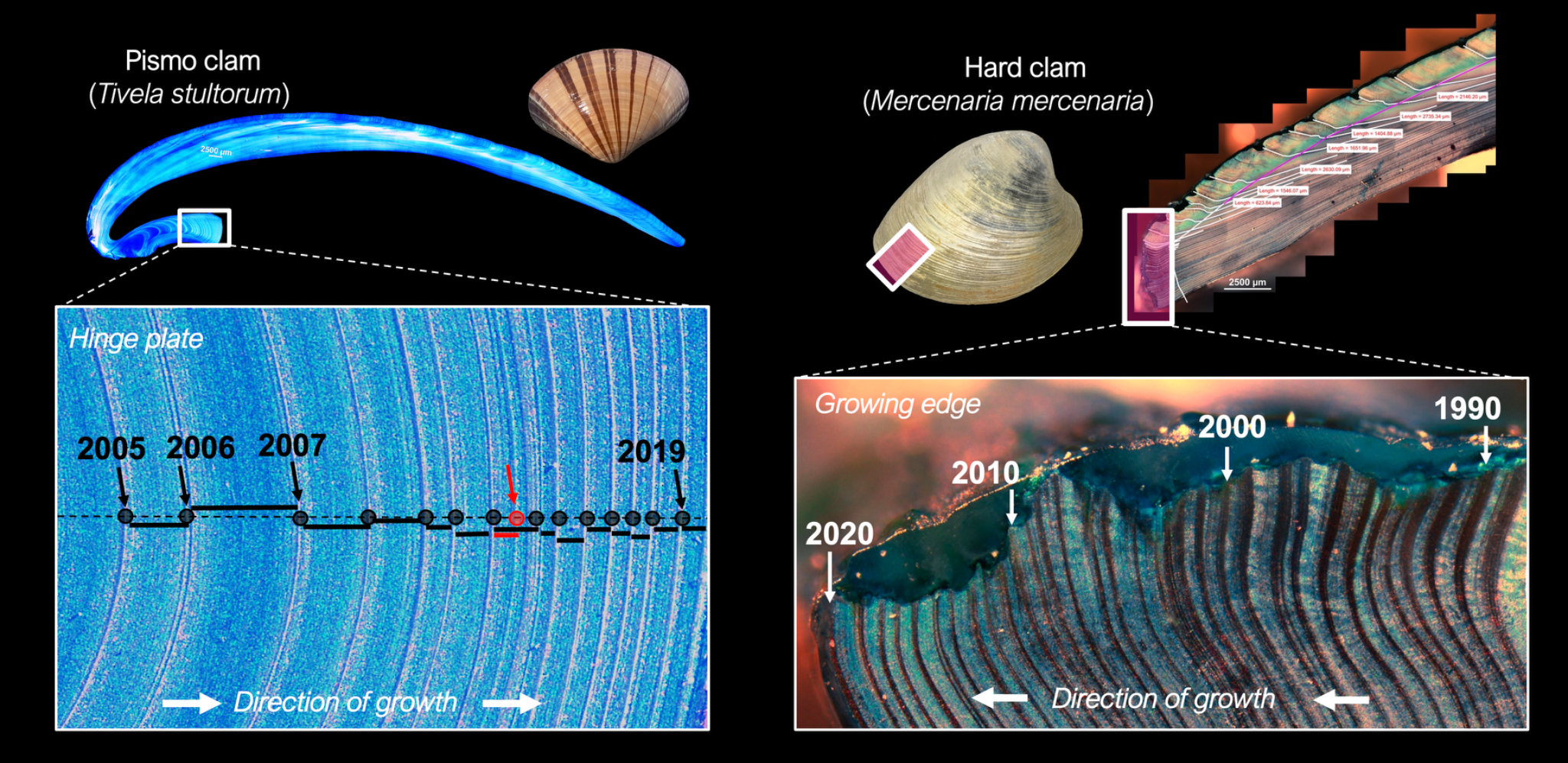
Annual shell records let me test whether growth–environment relationships persist through time and whether distant populations share years of unusually high or low growth. I prepare and crossdate shells to compare growth in the same calendar years, rather than simply comparing animals of the same age.
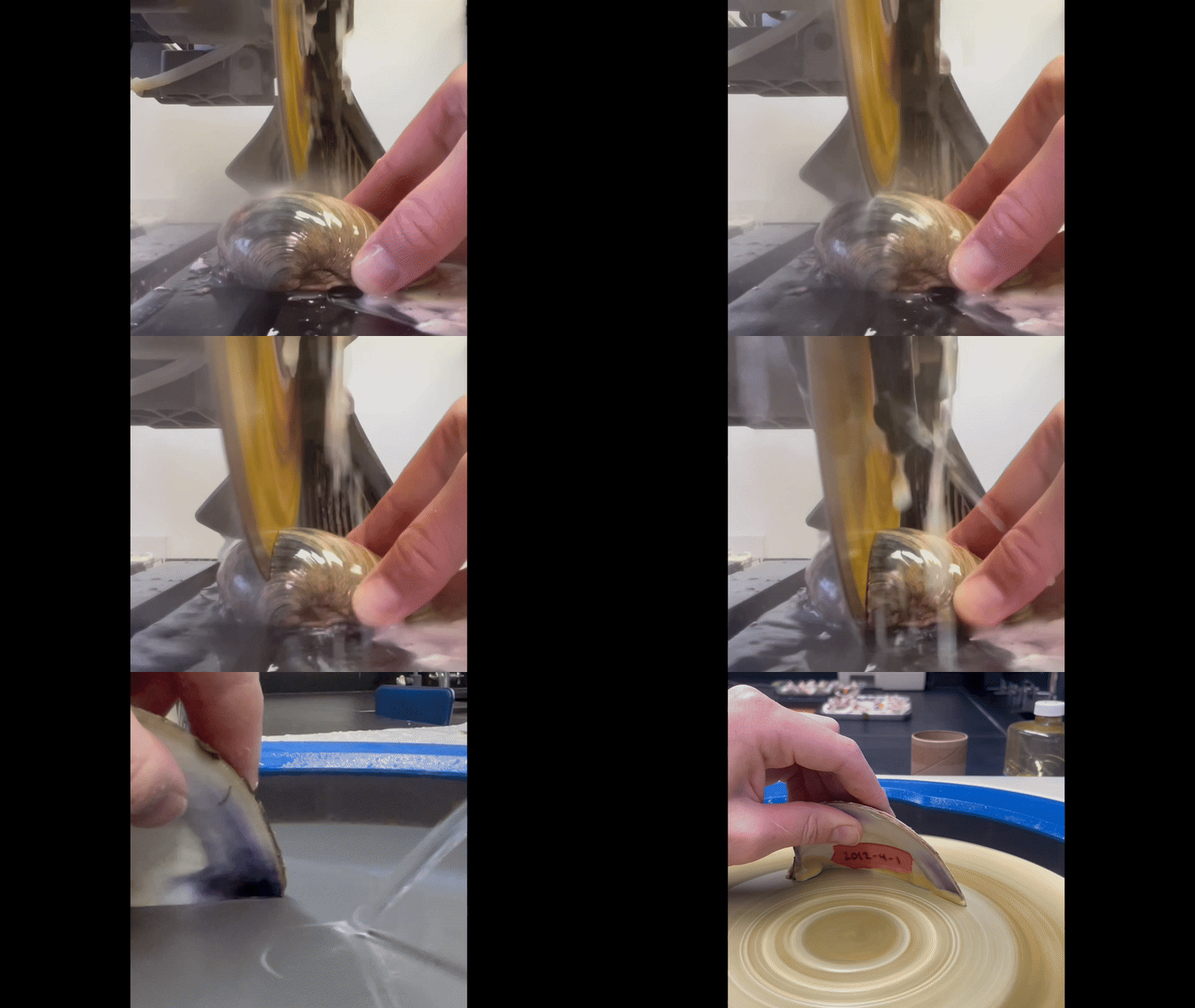
Shell preparation
I section, polish, stain, and image shells to reveal annual growth increments and the boundaries formed during winter growth cessation.
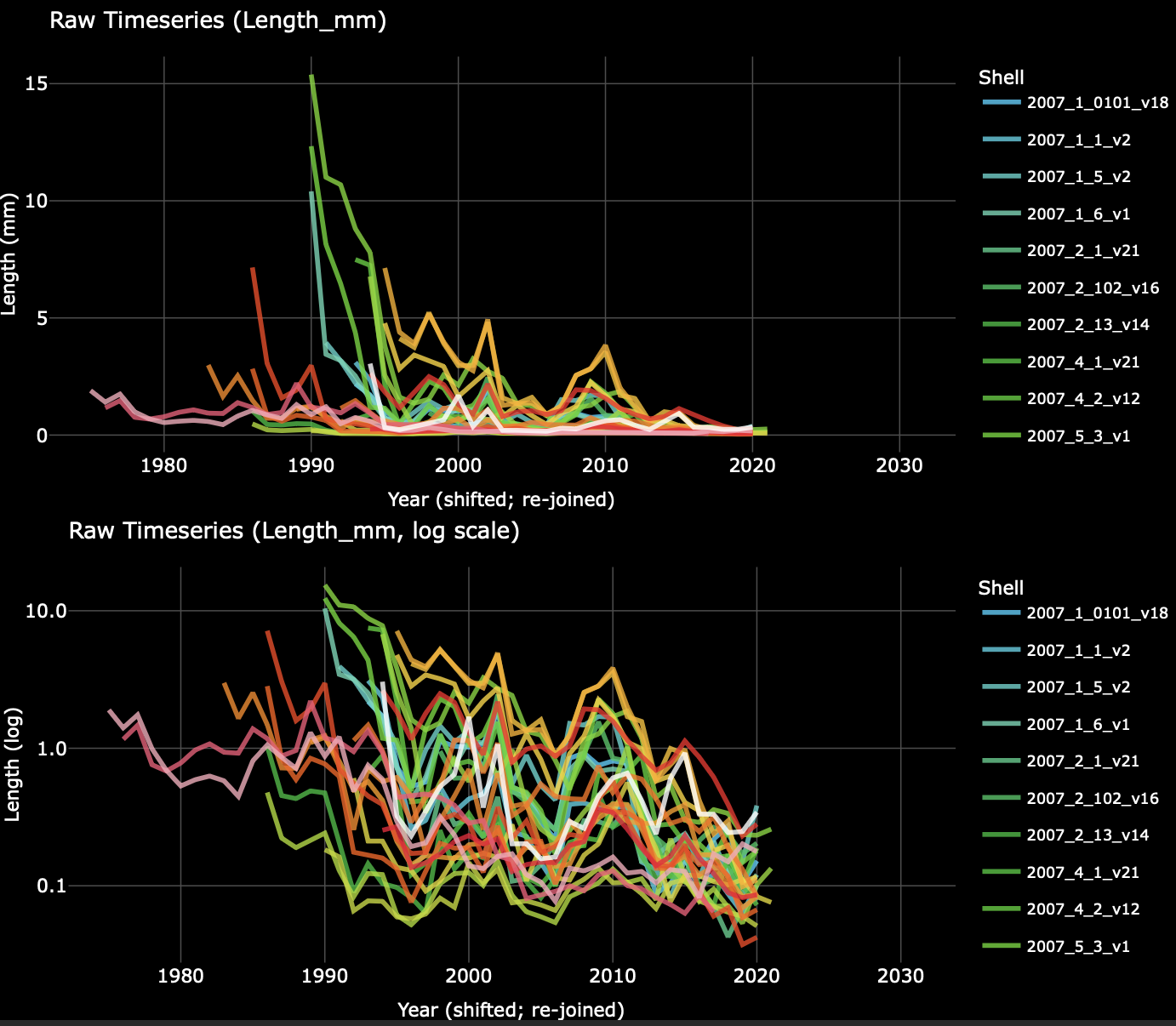
Growth chronologies
After accounting for age-related growth trends, I combine crossdated records into annual growth indices. Sample depth and agreement among shells indicate how well each part of the chronology is supported. Agreement among shells within a site supports chronology construction; synchrony among site chronologies is a separate ecological question.
ScleroLab
I am developing ScleroLab, an R Shiny app for shell-growth measurements, age detrending, chronology construction, and synchrony analysis. The visual workflow makes it easier to examine which records overlap, how detrending changes the growth series, and where replication supports comparisons.

Chronology diagnostics and app screenshots
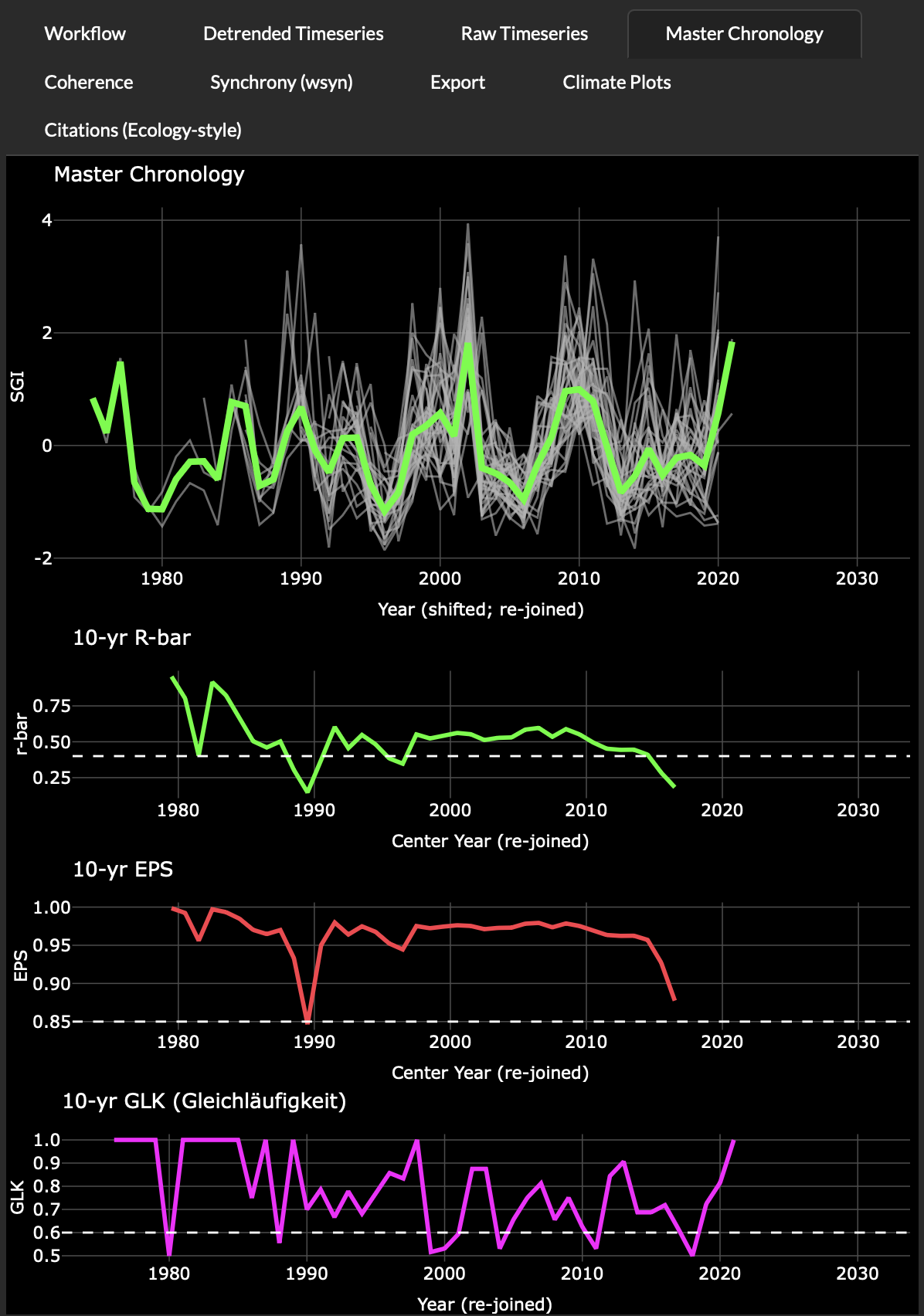
Chronology diagnostics
Sample depth, interseries correlation, EPS, and GLK describe the strength and consistency of the shared growth signal.
Growth synchrony
Alongside pairwise correlations, wavelet analyses distinguish shorter- and longer-term fluctuations and show whether synchrony persists or occurs during particular periods. These comparisons address spatial synchrony; persistence within an individual time series is a different form of dependence that also needs to be accounted for.
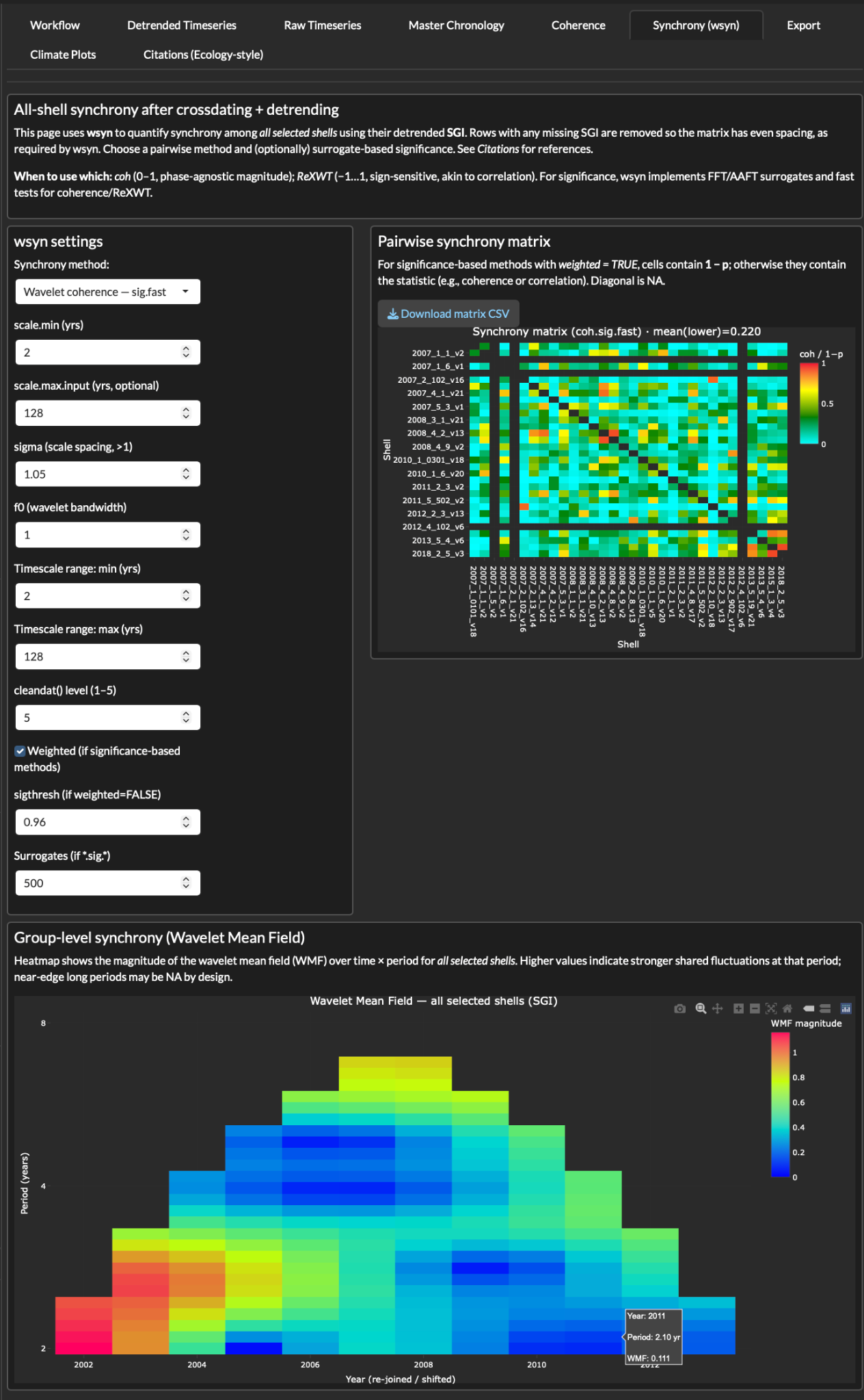
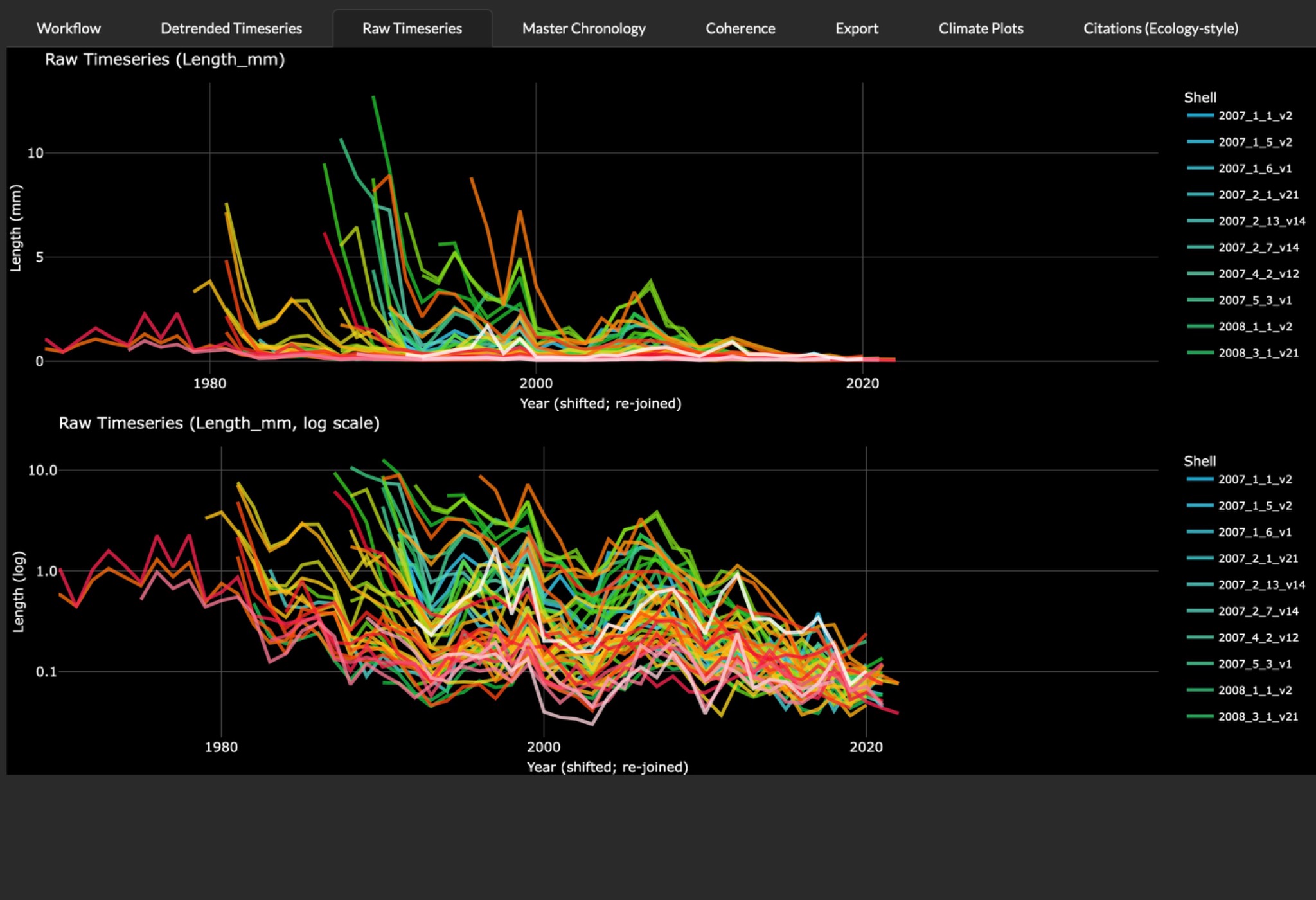
Screenshots from the development version.
Contact me about using ScleroLab →
Seagrass and long-term clam growth → · Pismo clam growth synchrony →