Seagrass & hard-clam growth
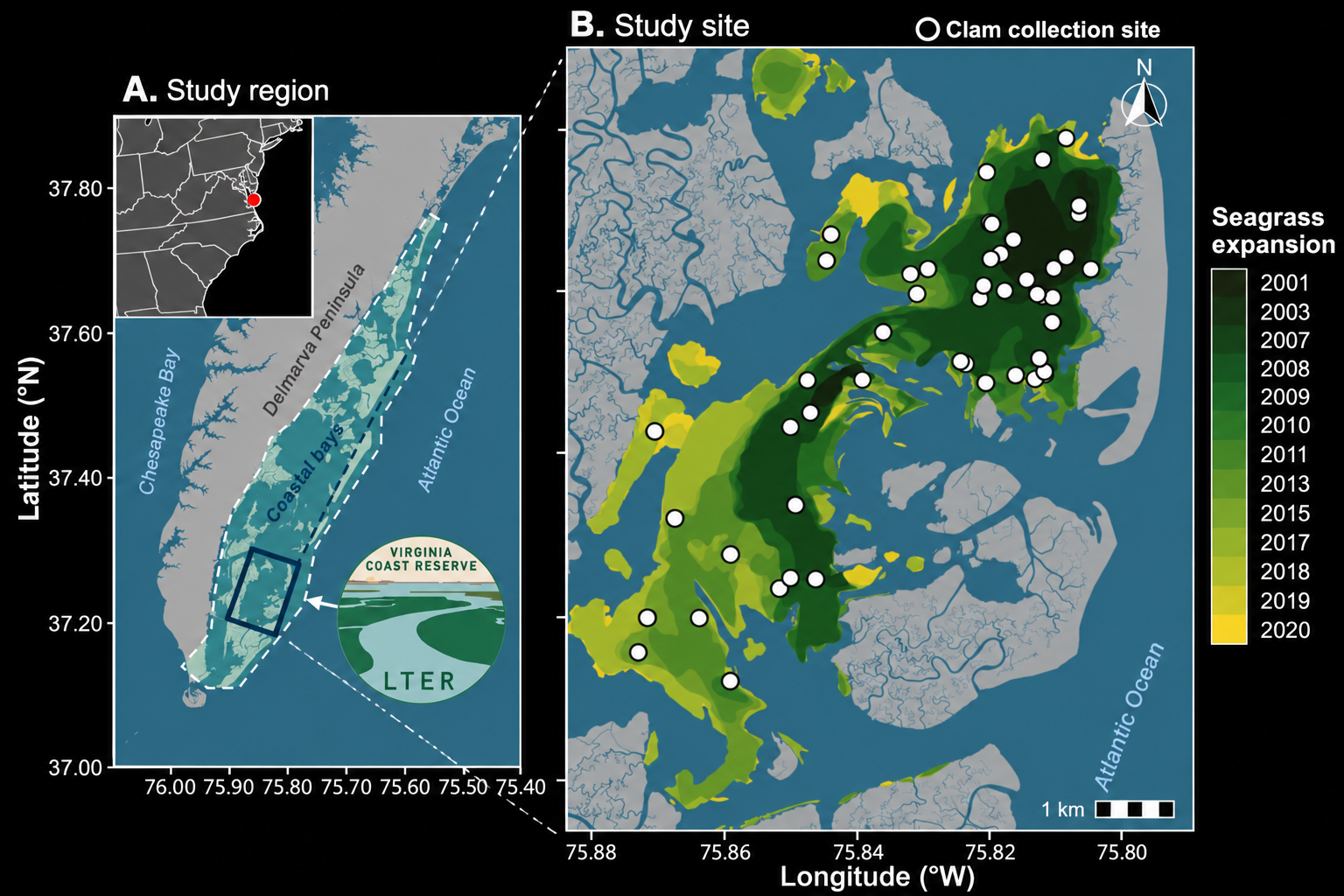
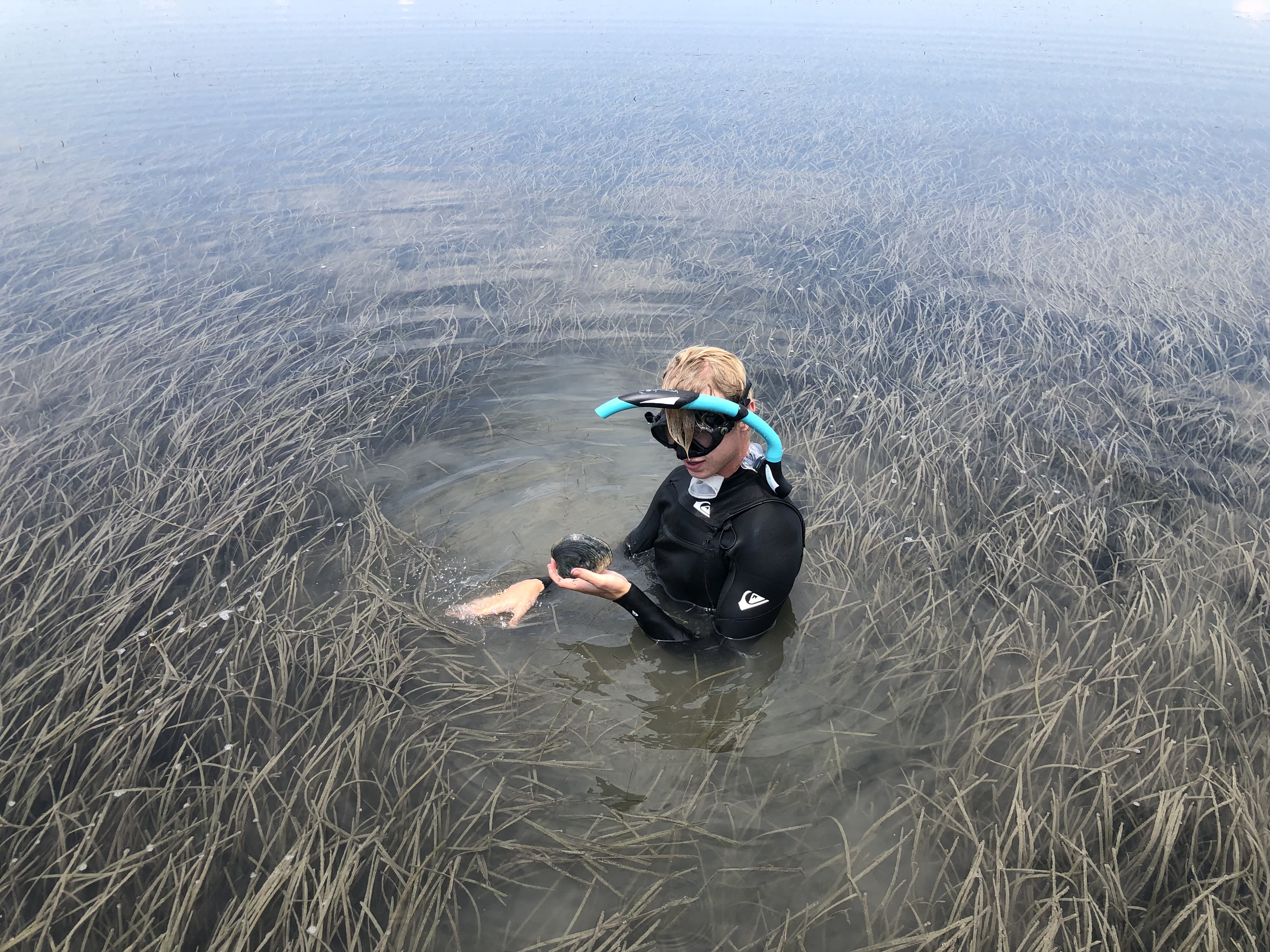
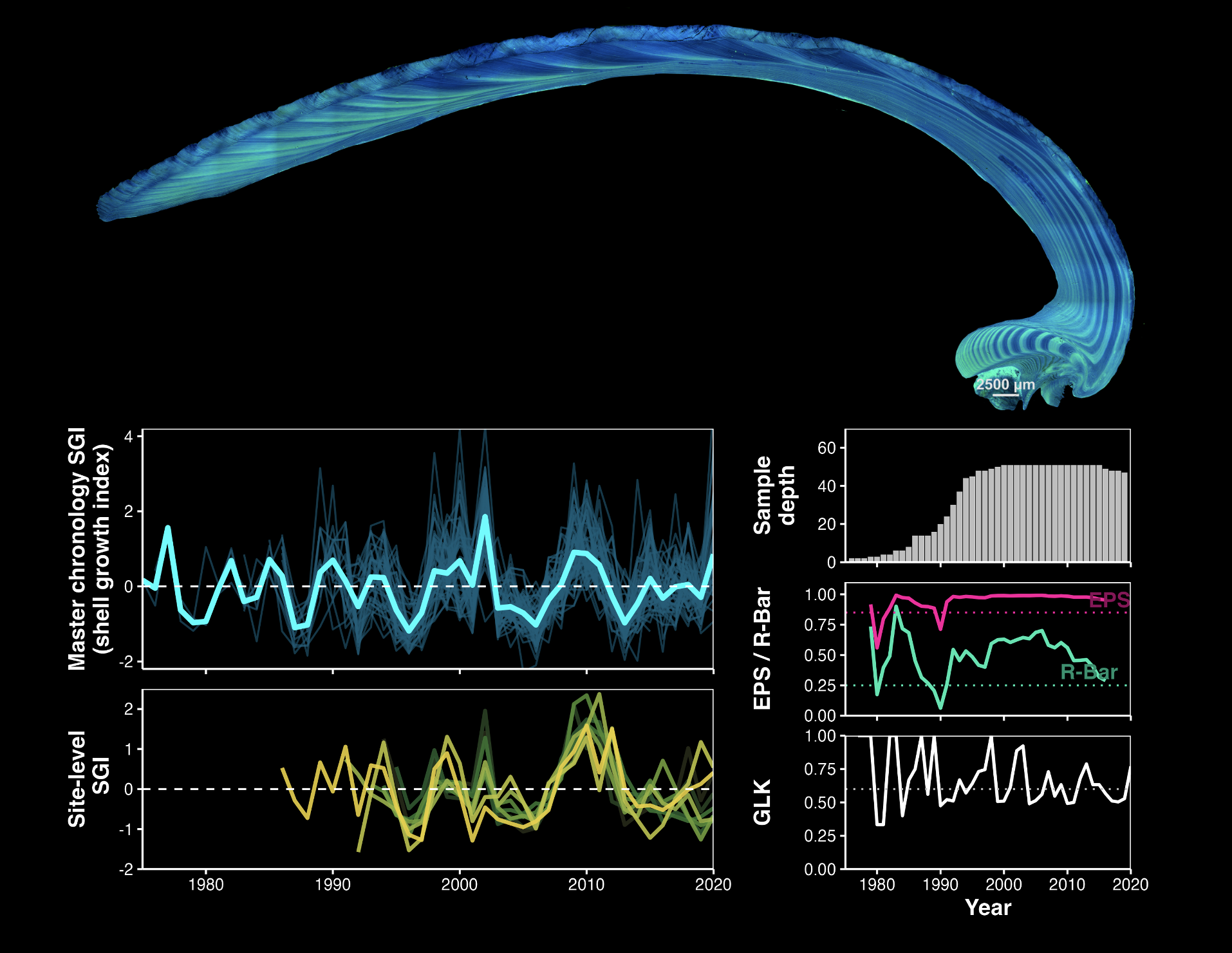
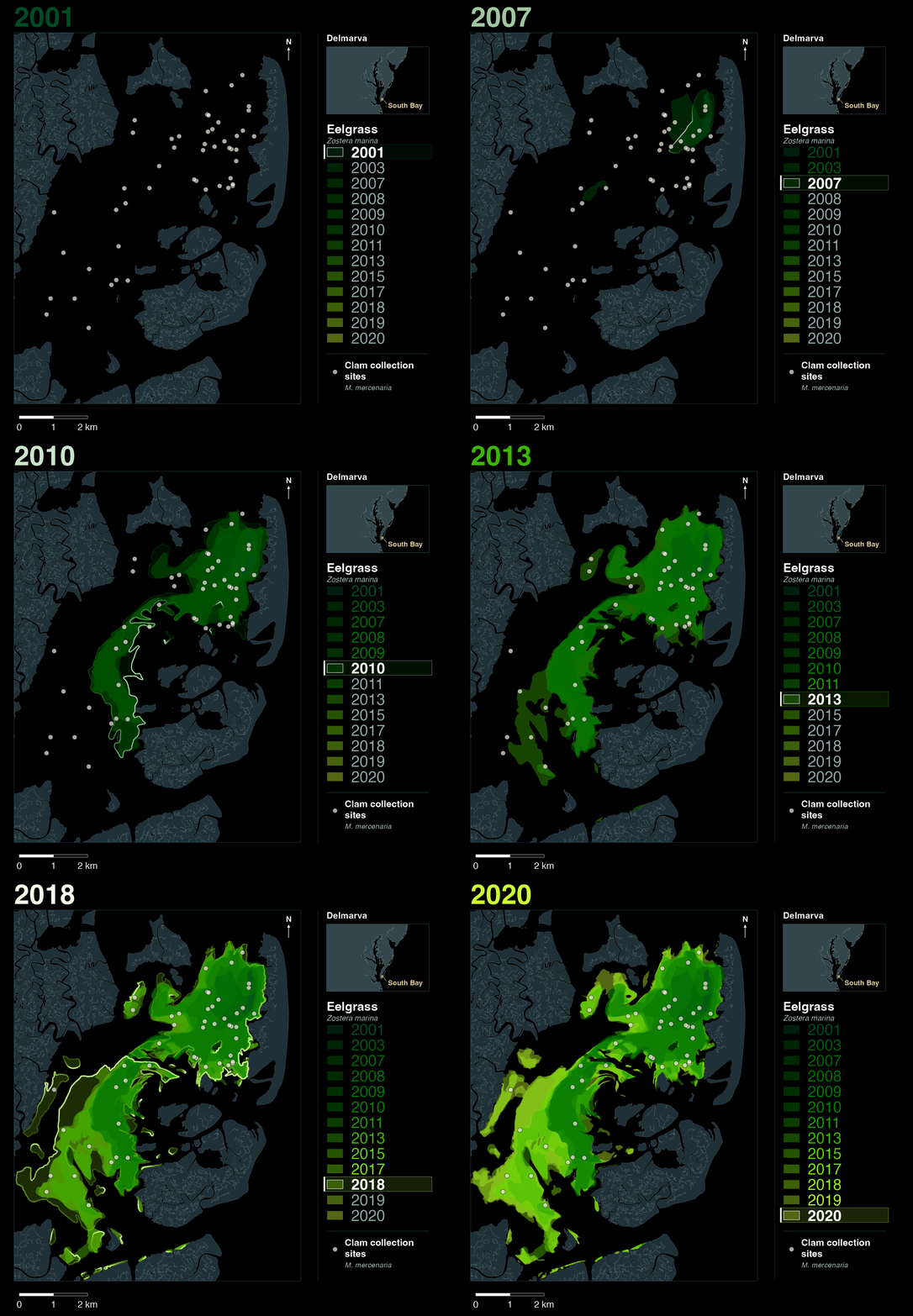
Does a major change in habitat leave a detectable signal in decades of animal growth? With Max Castorani, I reconstructed a 45-year record (1976–2020) from 51 hard clams (Mercenaria mercenaria) in South Bay, Virginia. Annual growth tracked temperature, while meadow expansion and meadow-edge position showed no detectable association with growth in the models described below.

This work was part of my dissertation at the Virginia Coast Reserve LTER, supported by a Virginia Sea Grant Graduate Research Fellowship.
2021–2023 · $81,775
Growth tracked temperature
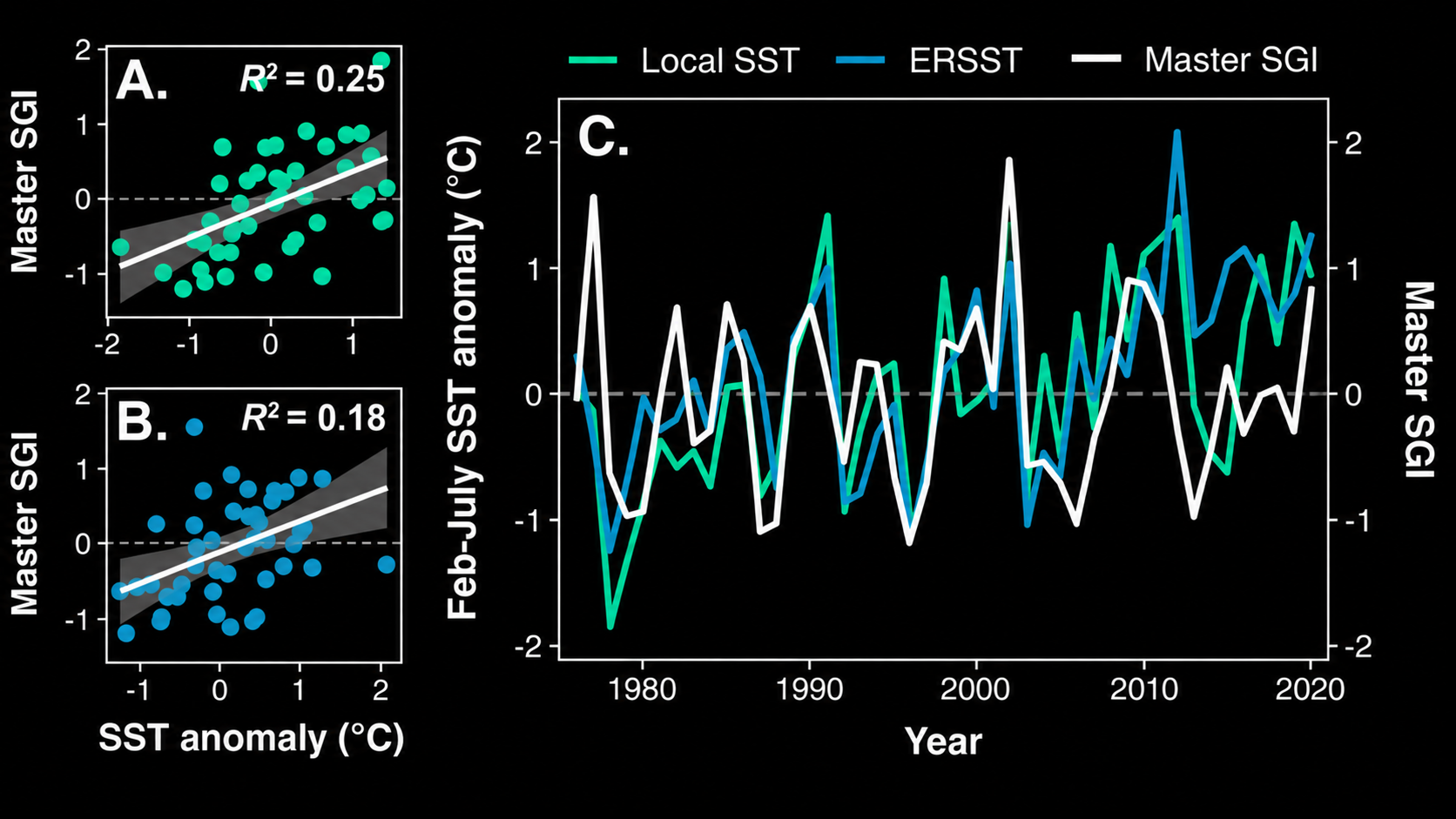
Warmer February–July conditions were associated with faster growth. Local and regional temperature records explained approximately 25% and 18% of annual growth variation, respectively. Positive growth–temperature correlations persisted after accounting for year-to-year autocorrelation in both records.
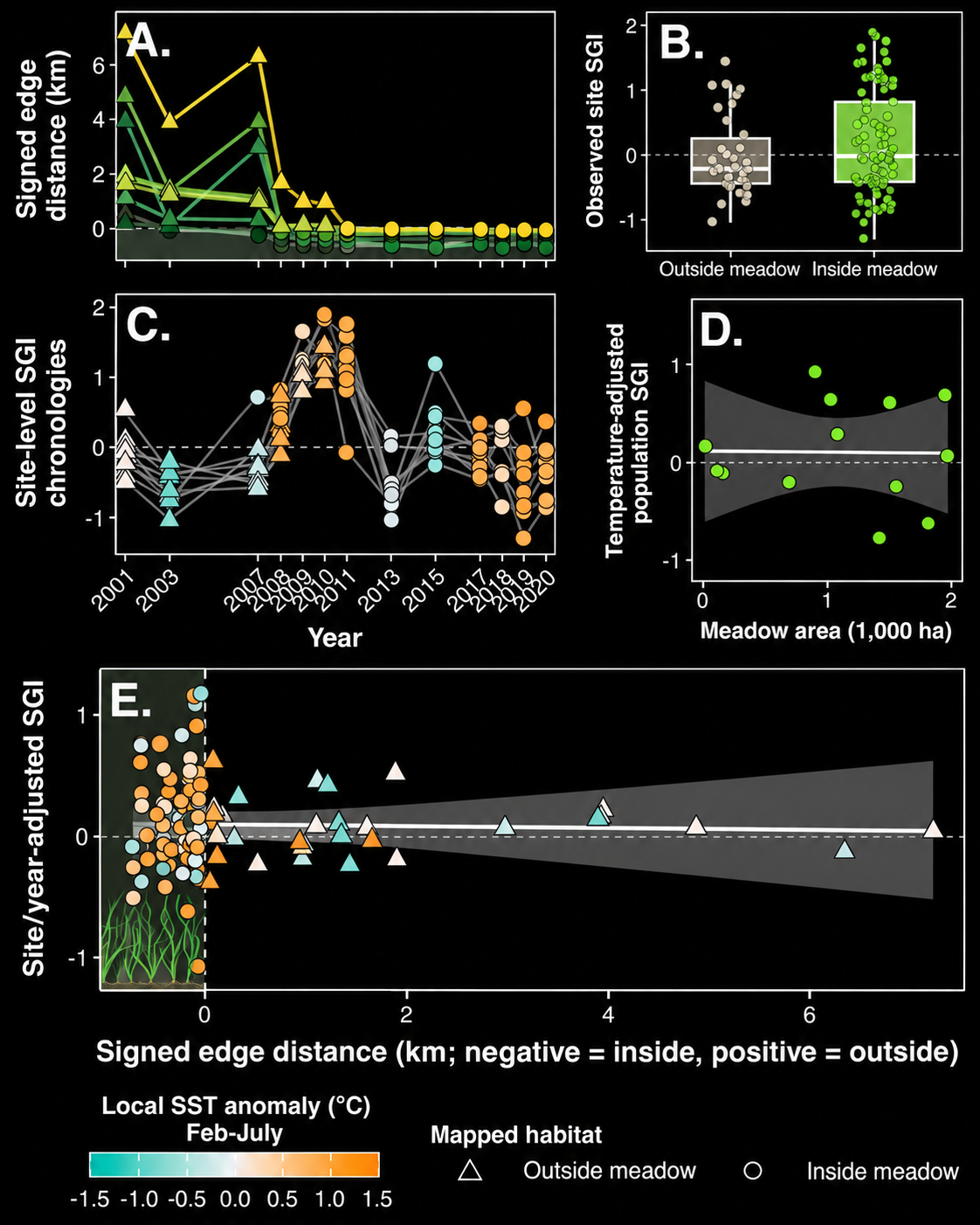
Meadow expansion showed no detectable association with growth after accounting for temperature. Meadow-edge position likewise showed no detectable association across 117 site-years after accounting for site and year.
Meadow expansion and spatial models
Shell preparation and chronology construction
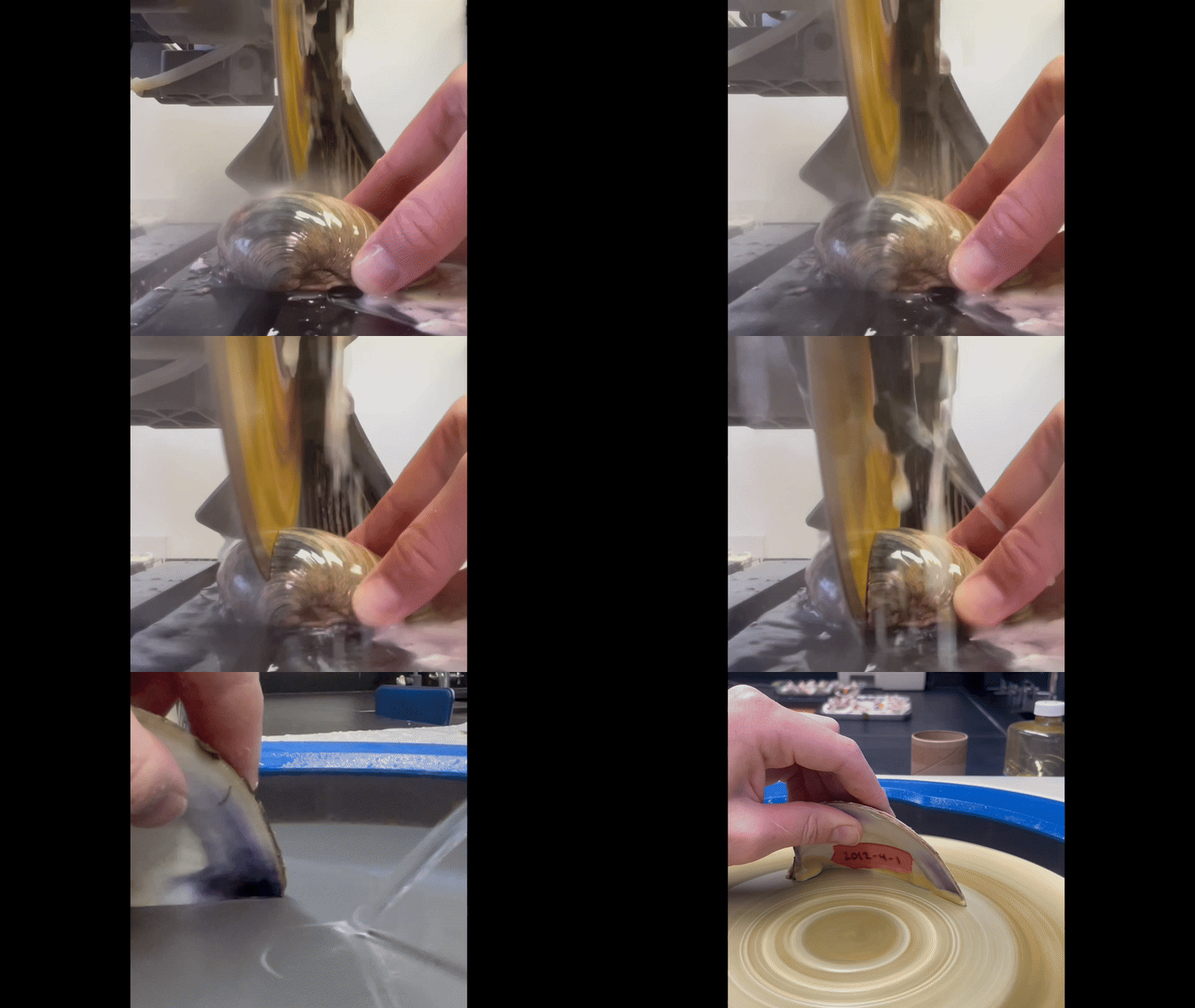
We sectioned, polished, stained, and imaged 194 shells from South Bay. The final crossdated chronology draws on 51 clams, linking their growth increments to calendar years.
Shell-growth chronology
Season, life stage, and timescale
In separate dissertation experiments, seagrass enhanced juvenile growth while adult growth showed little habitat response; predation varied with habitat, season, and life stage. These results and the long-term record concern different responses, life stages, and observation periods—not a single habitat effect measured at different scales.
The next question is whether shared environmental variation also links growth across distant populations. My Pismo clam project tests that relationship across California and Baja California.

